
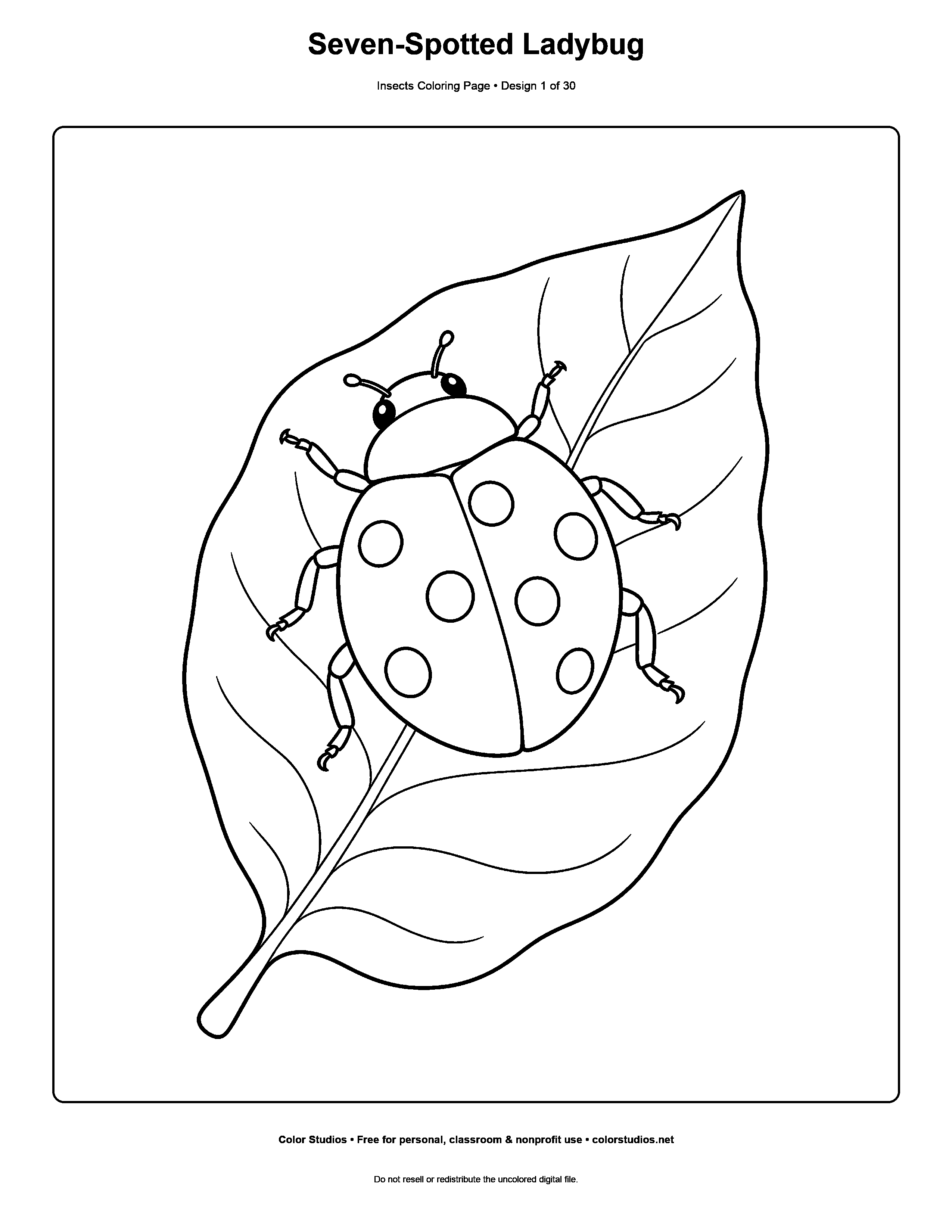
Seven-Spotted Ladybug
Ages 3–5Easy
Easy seven-spotted ladybug on a leaf.
US Letter · 2550 × 3300 PNGInsect coloring pages are printable black-and-white pictures of six-legged animals such as bees, beetles, ants, ladybugs, dragonflies, grasshoppers, mantises, moths, fireflies, cicadas, crickets, lacewings, and stick insects. This original 30-page collection combines easy insect coloring pages, active habitat scenes, and realistic insect coloring pages, with free US Letter and A4 PNG sheets plus complete PDF bundles for home, classroom, library, and nature-program use.
Original, non-branded artwork · Print layout checked · Updated July 21, 2026
 Seven-Spotted Ladybug
Search by subject or style, choose a paper size and difficulty, then print one design, download its full-resolution PNG, or save favorites from different collections in one custom coloring pack. You can also download this complete collection as one Letter or A4 PDF.
Easy seven-spotted ladybug on a leaf.
US Letter · 2550 × 3300 PNG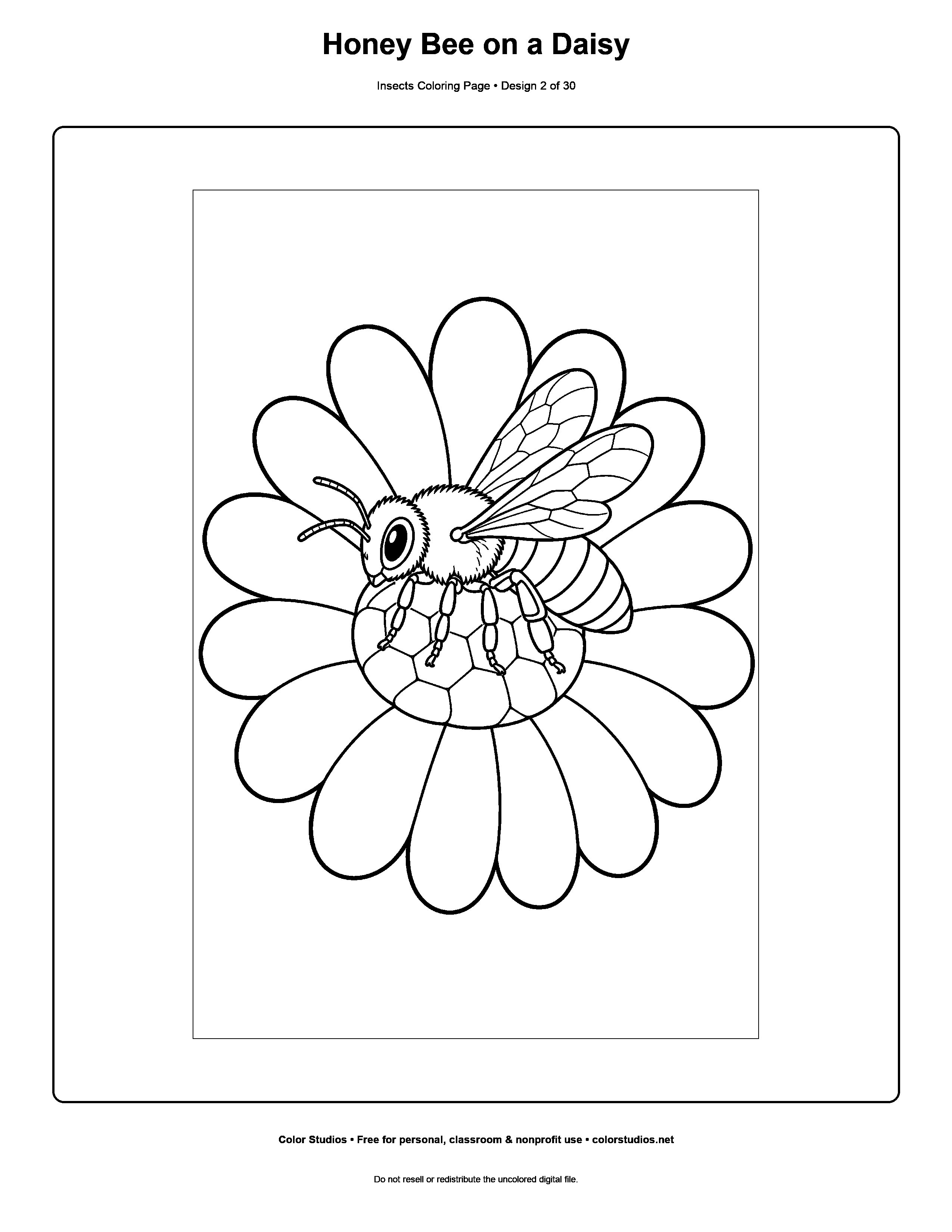
Easy honey bee resting on a large daisy.
US Letter · 2550 × 3300 PNG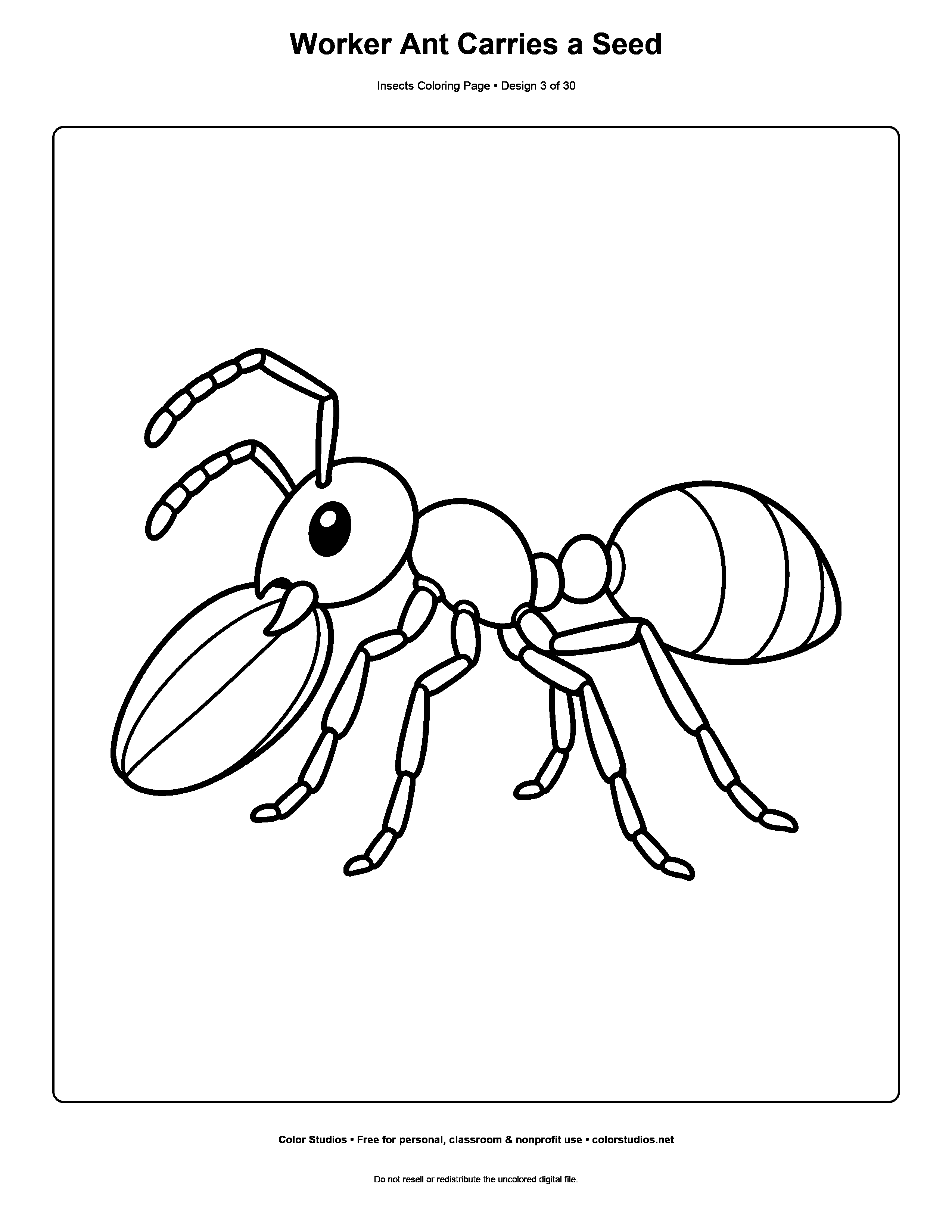
Easy worker ant carrying a seed.
US Letter · 2550 × 3300 PNG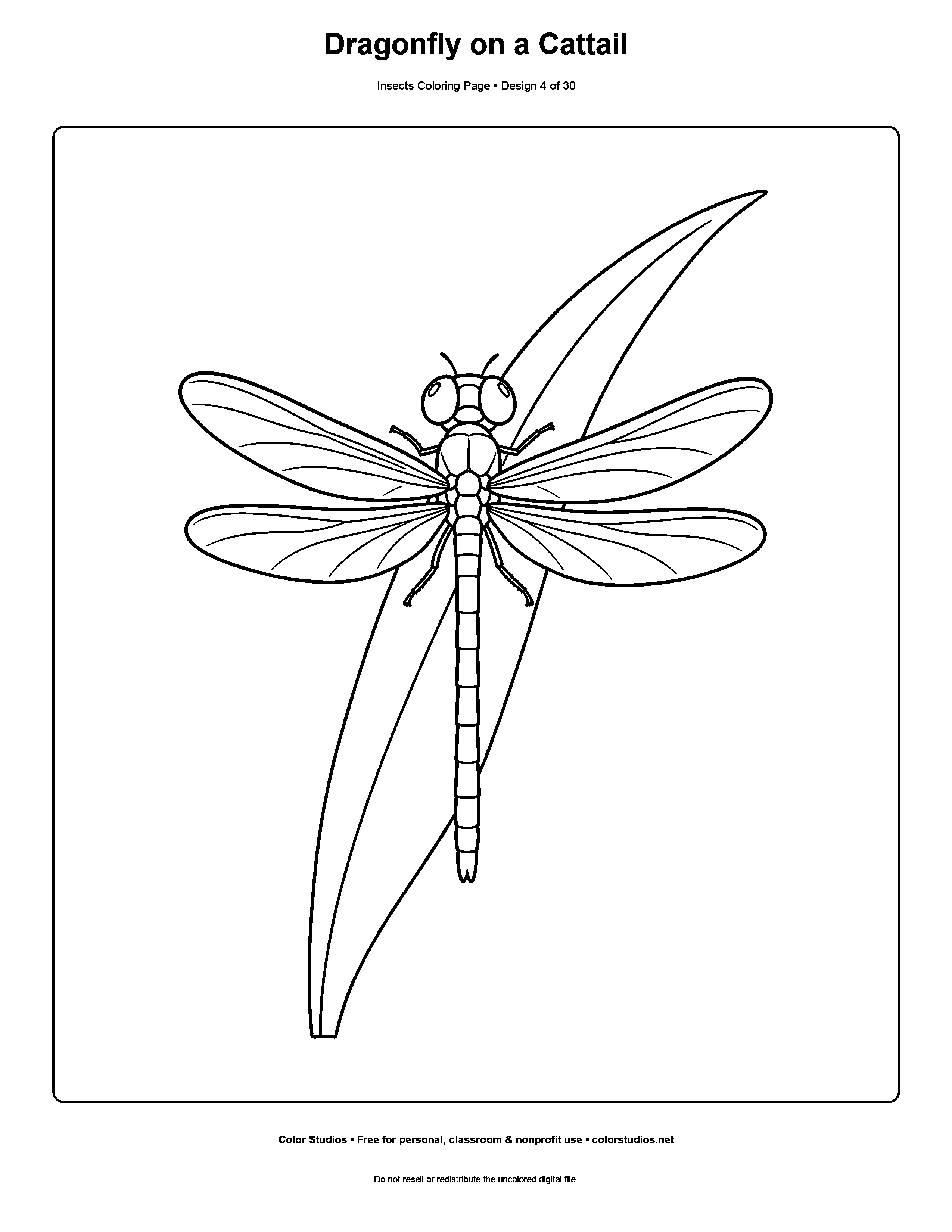
Easy dragonfly with four wings perched on a cattail leaf.
US Letter · 2550 × 3300 PNG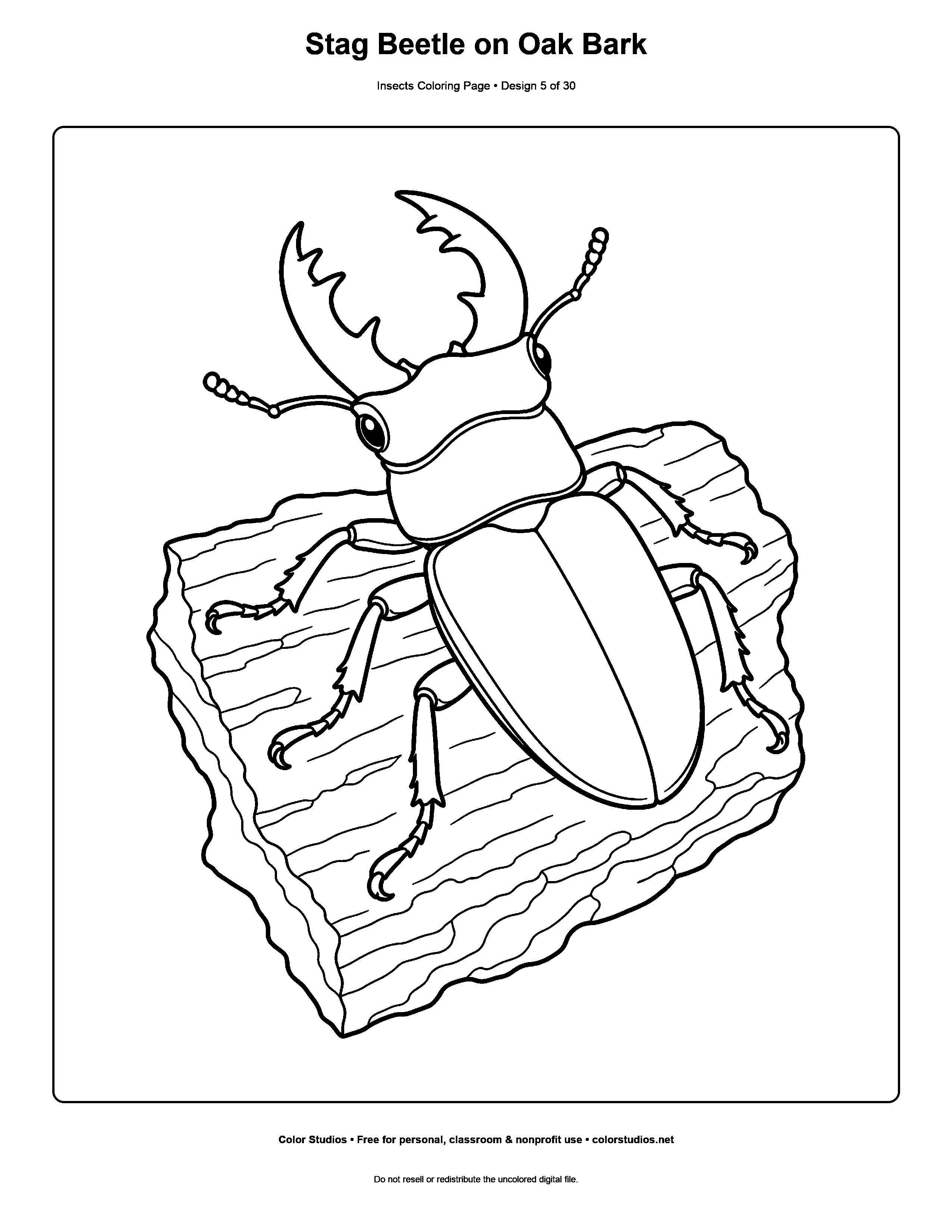
Easy stag beetle with branched mandibles on oak bark.
US Letter · 2550 × 3300 PNG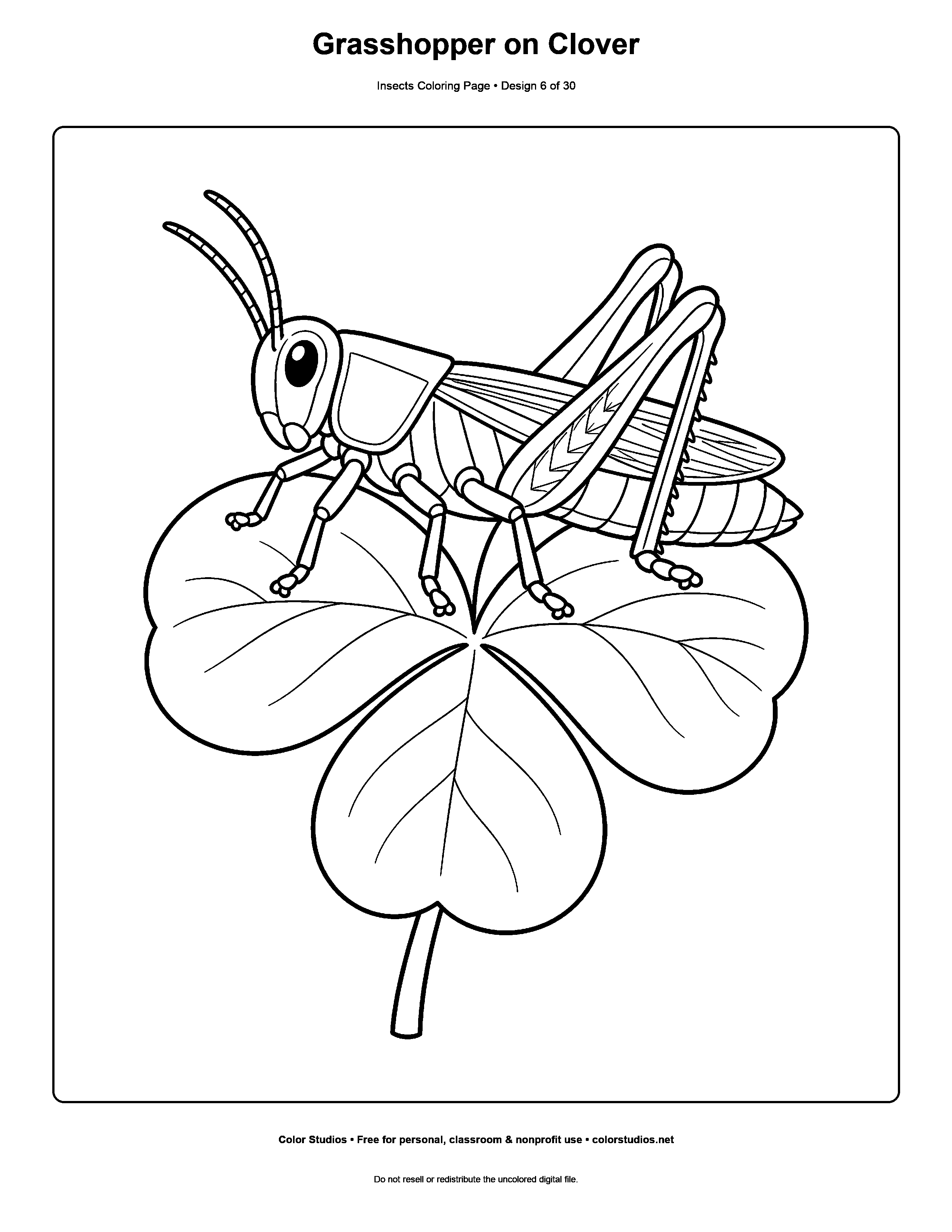
Easy grasshopper with large folded hind legs on a clover leaf.
US Letter · 2550 × 3300 PNG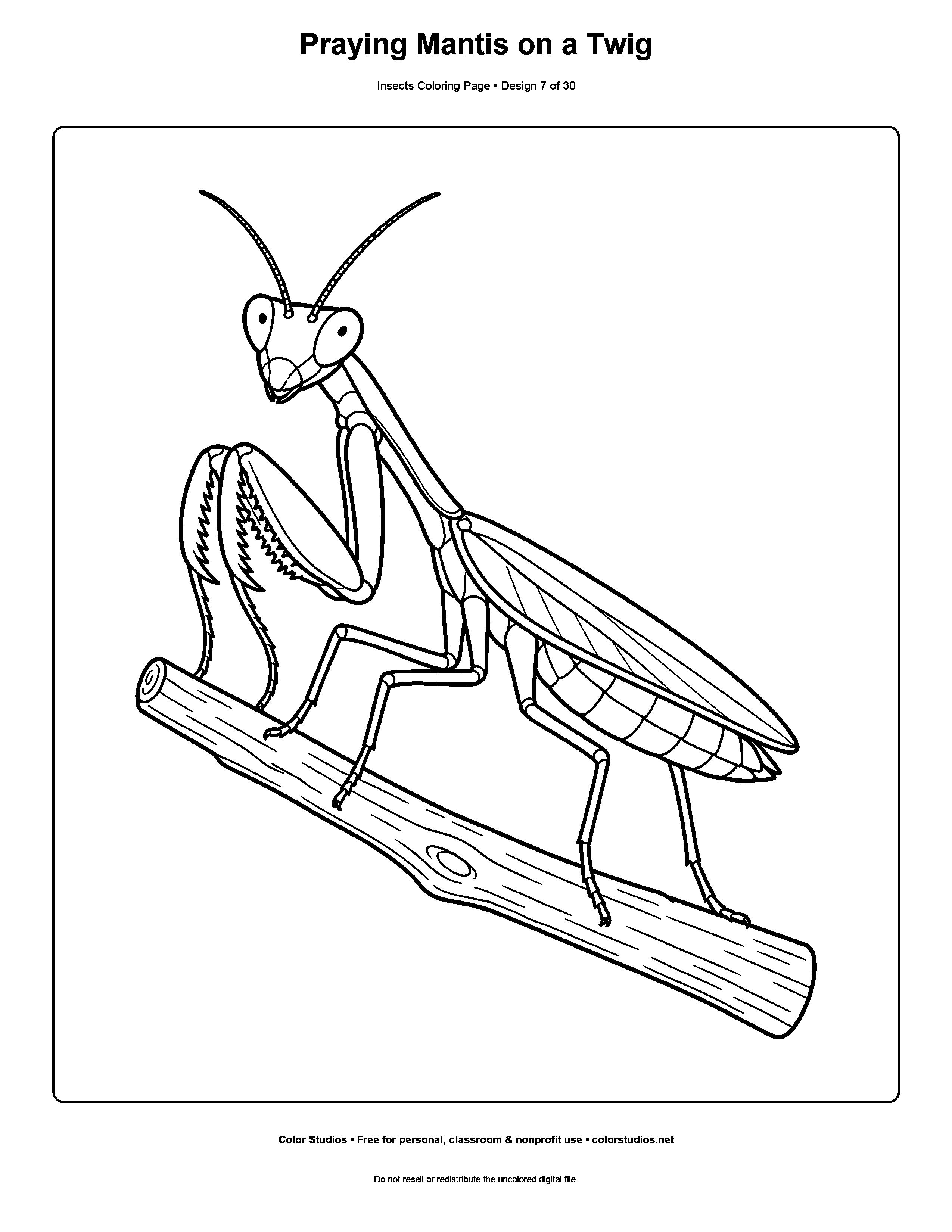
Easy praying mantis with folded grasping forelegs on a twig.
US Letter · 2550 × 3300 PNG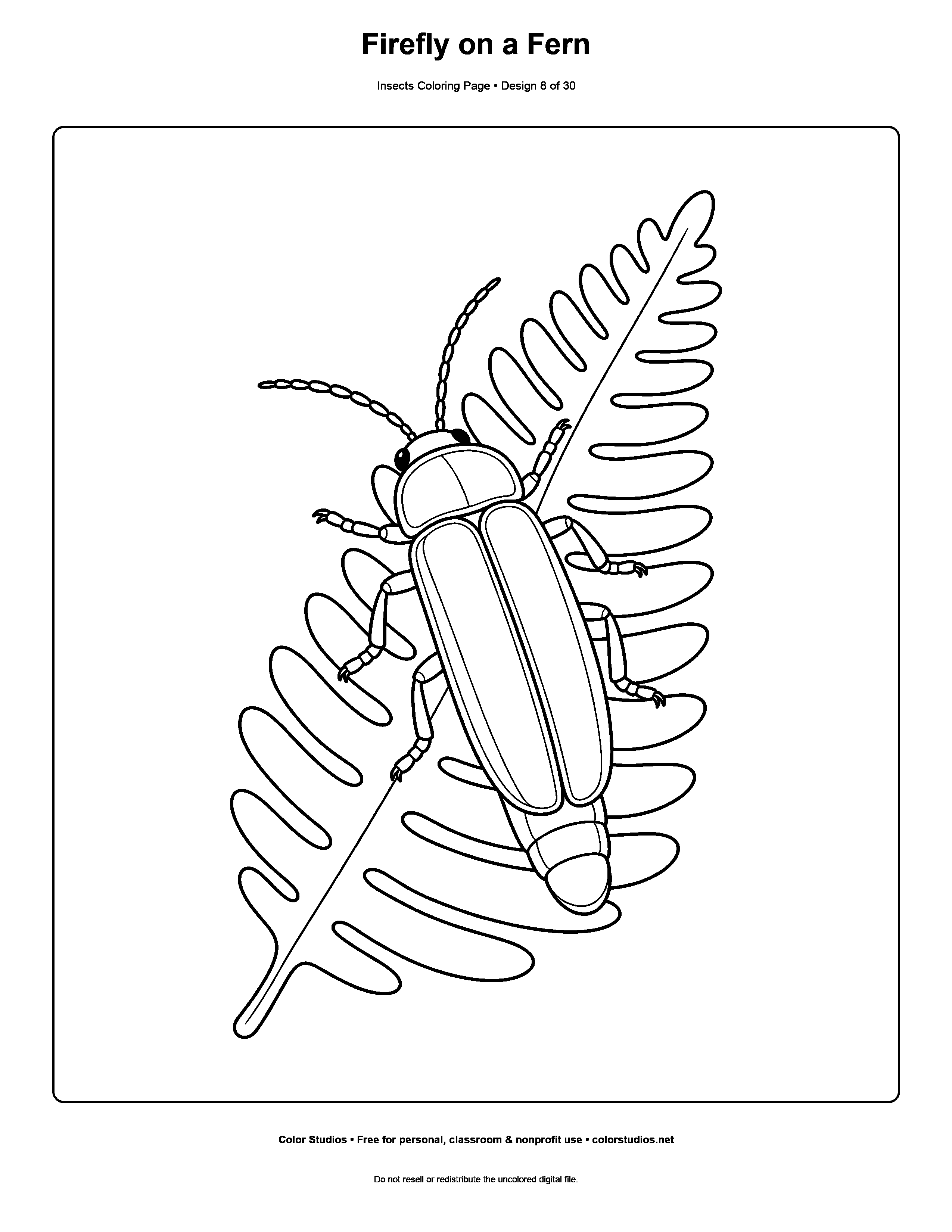
Easy firefly beetle with an outlined lantern resting on a fern.
US Letter · 2550 × 3300 PNG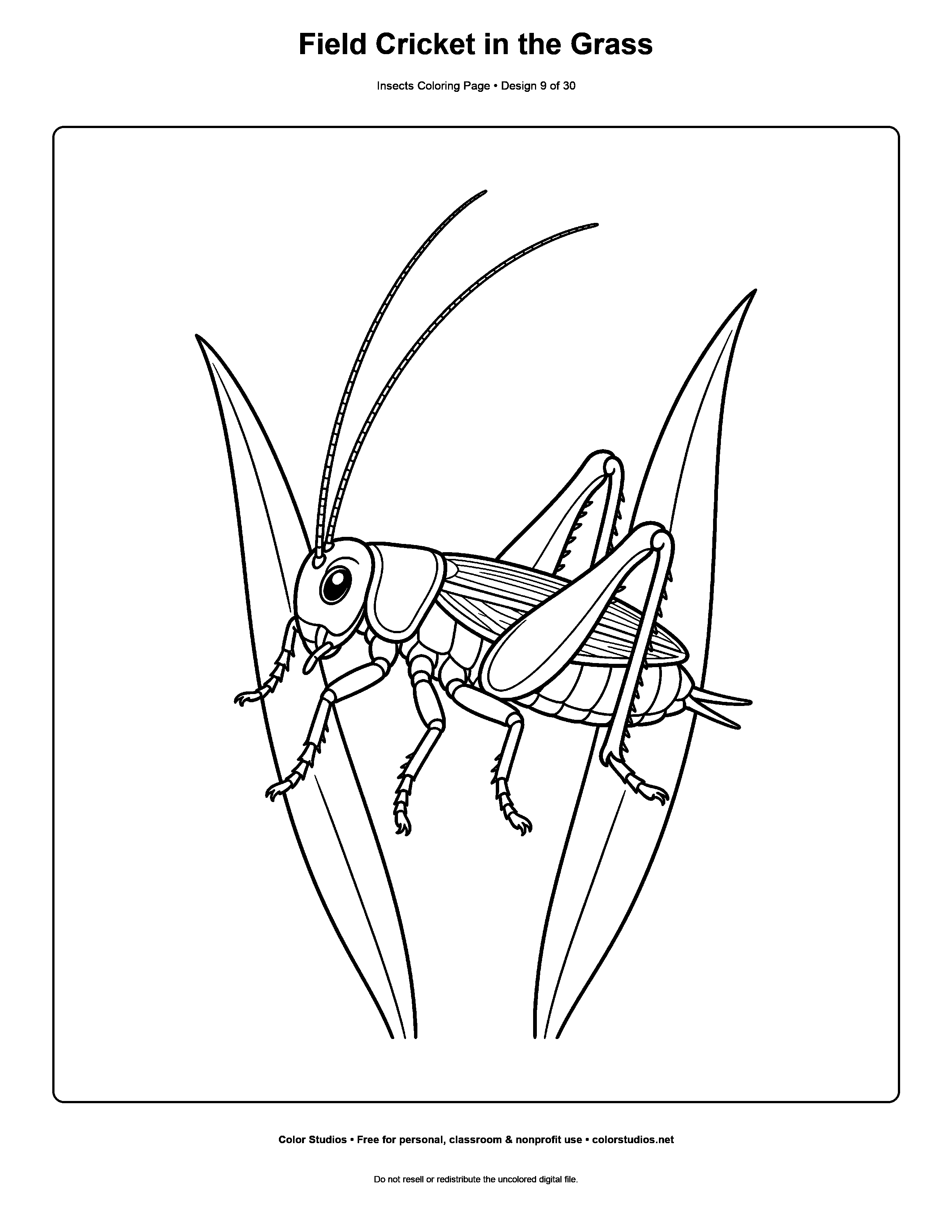
Easy field cricket with long antennae between two grass blades.
US Letter · 2550 × 3300 PNG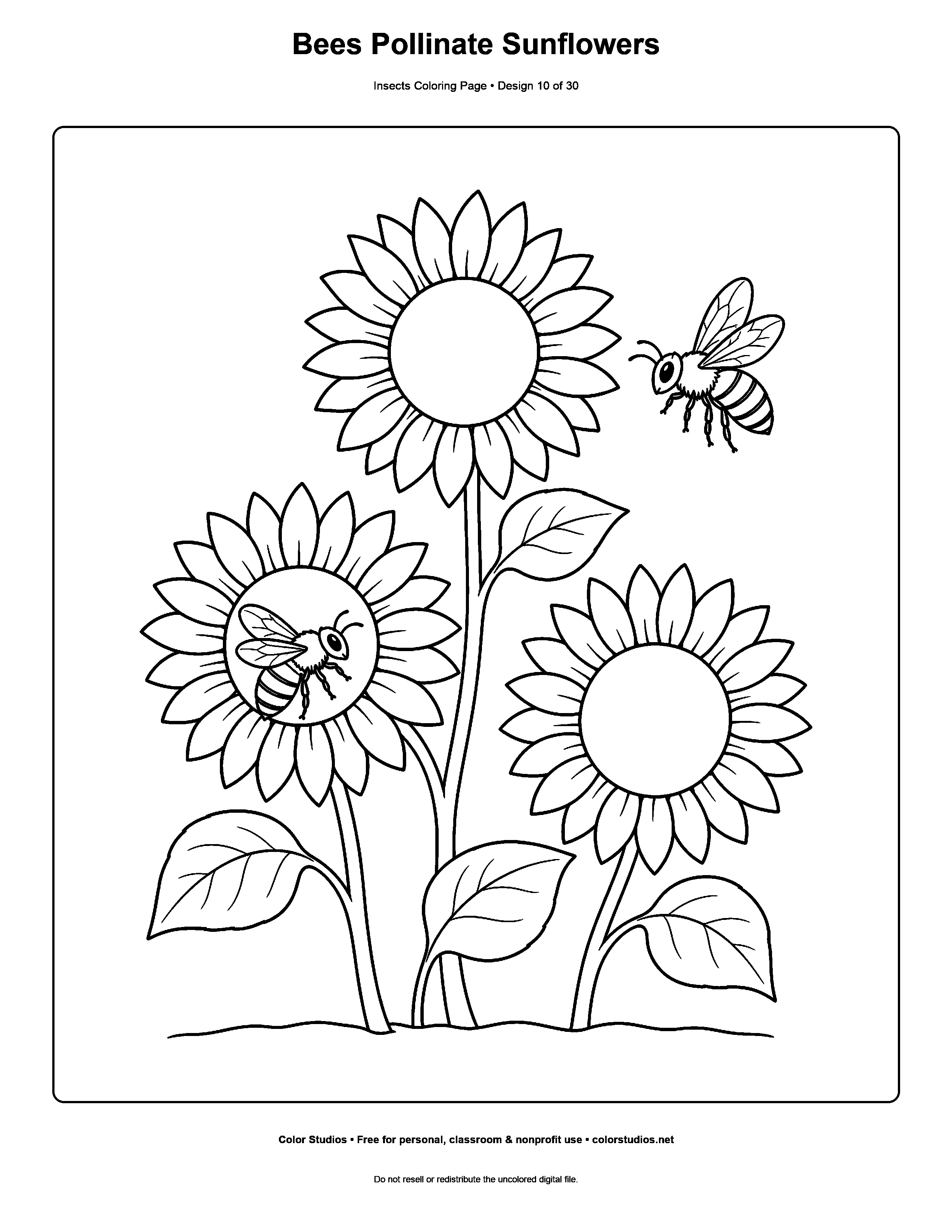
Two honey bees pollinating three sunflowers in a garden.
US Letter · 2550 × 3300 PNG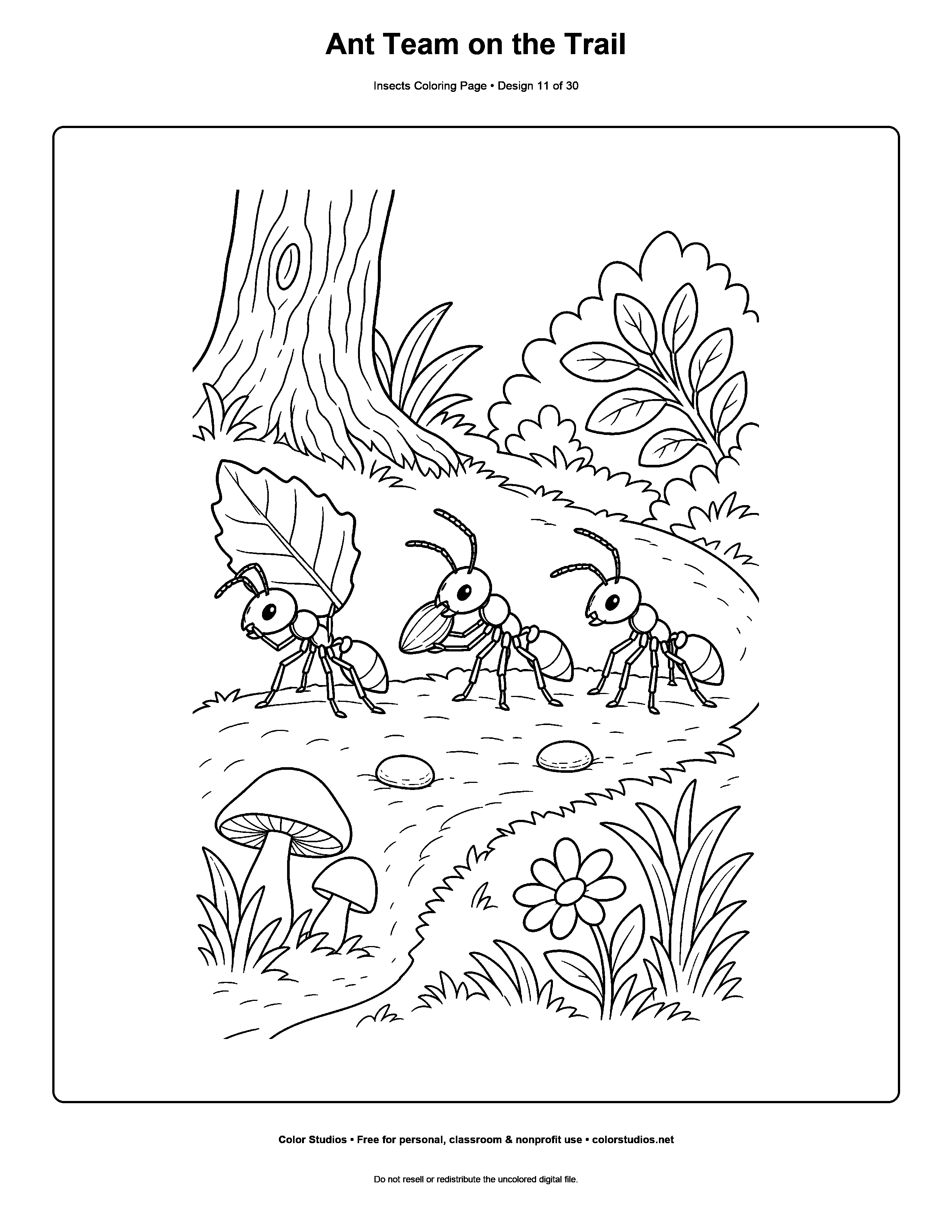
Three worker ants carrying a leaf piece and seed along a woodland trail.
US Letter · 2550 × 3300 PNG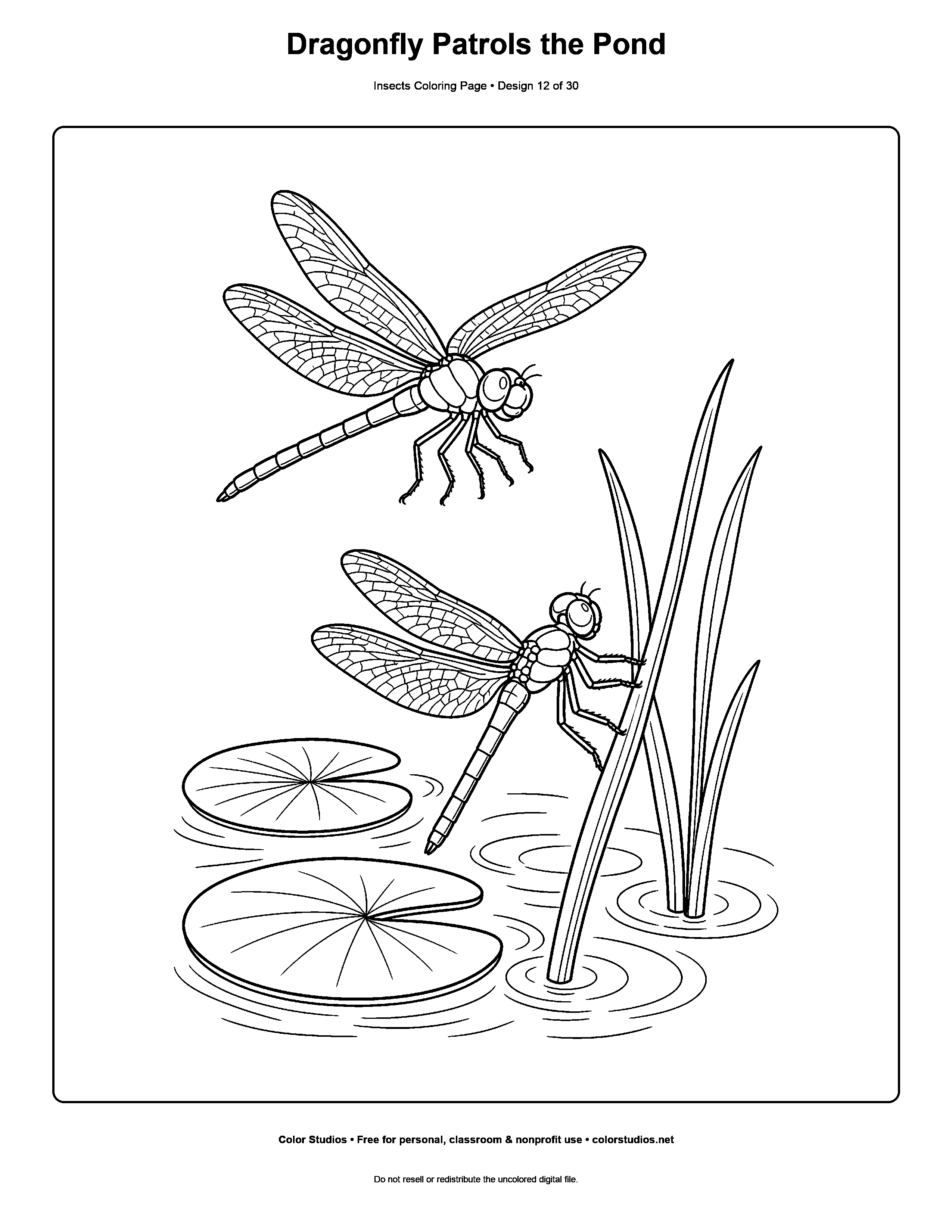
Two four-winged dragonflies flying and resting beside a pond.
US Letter · 2550 × 3300 PNG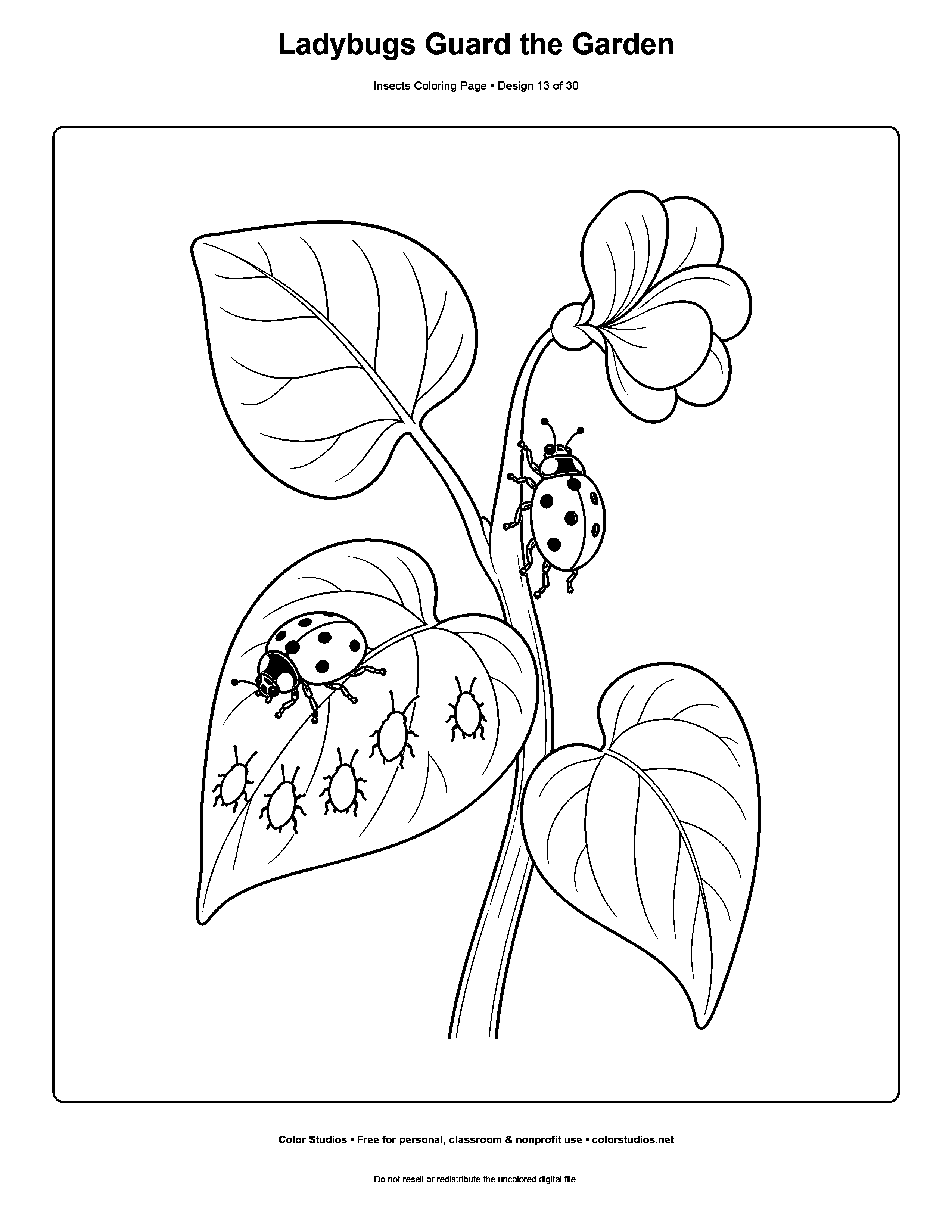
Two ladybugs exploring a bean plant near five small aphids.
US Letter · 2550 × 3300 PNG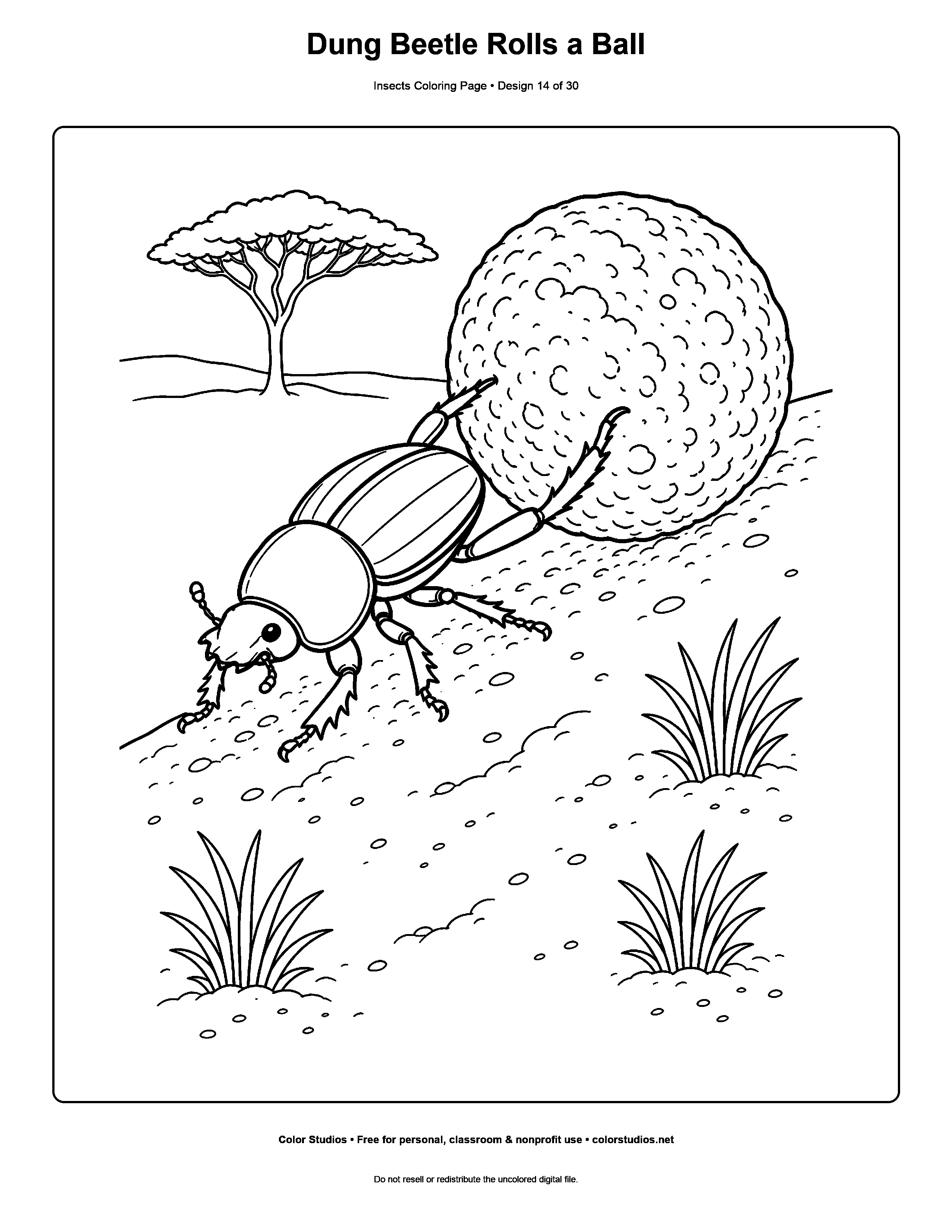
Dung beetle pushing a round ball up a gentle sandy slope.
US Letter · 2550 × 3300 PNG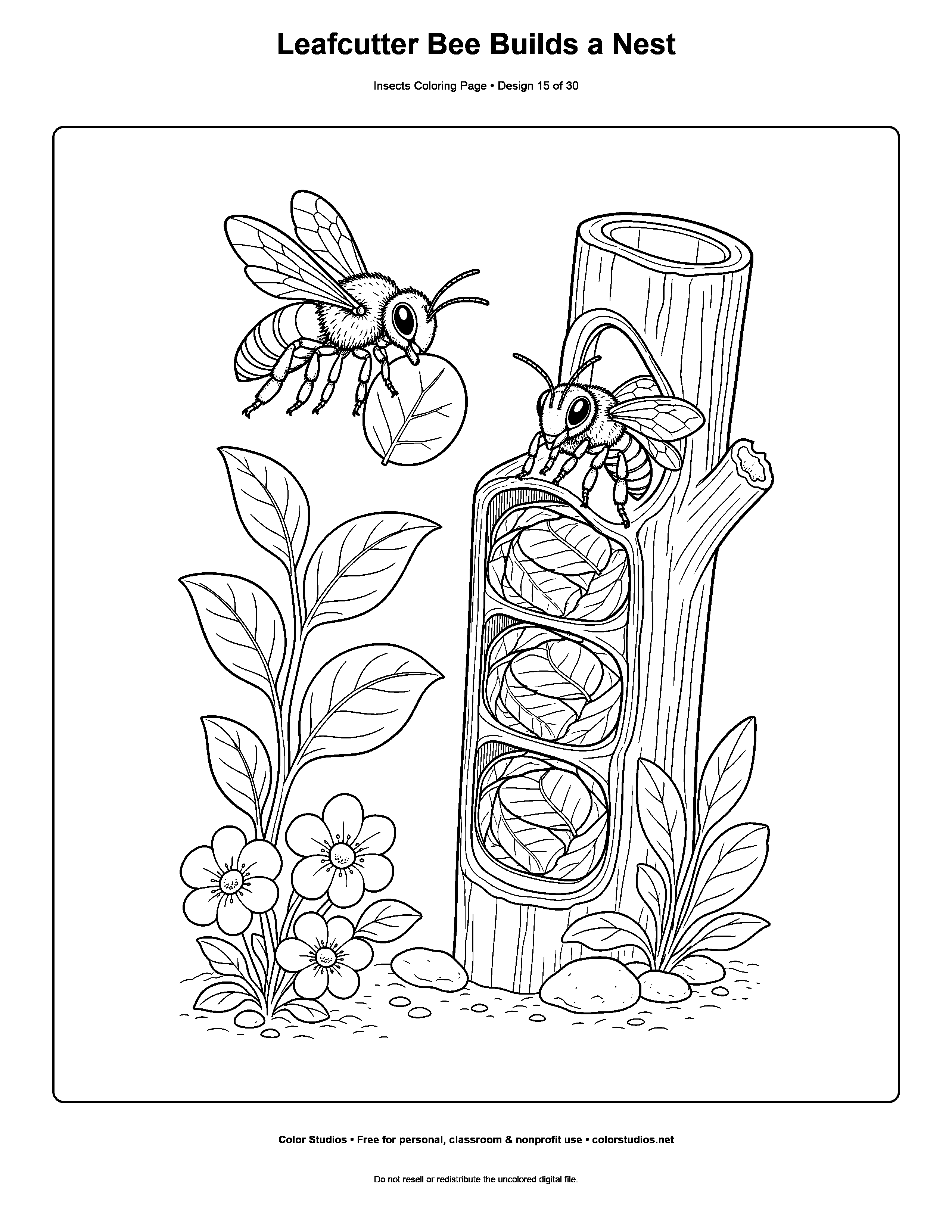
Two leafcutter bees building leaf-lined chambers inside a hollow stem.
US Letter · 2550 × 3300 PNG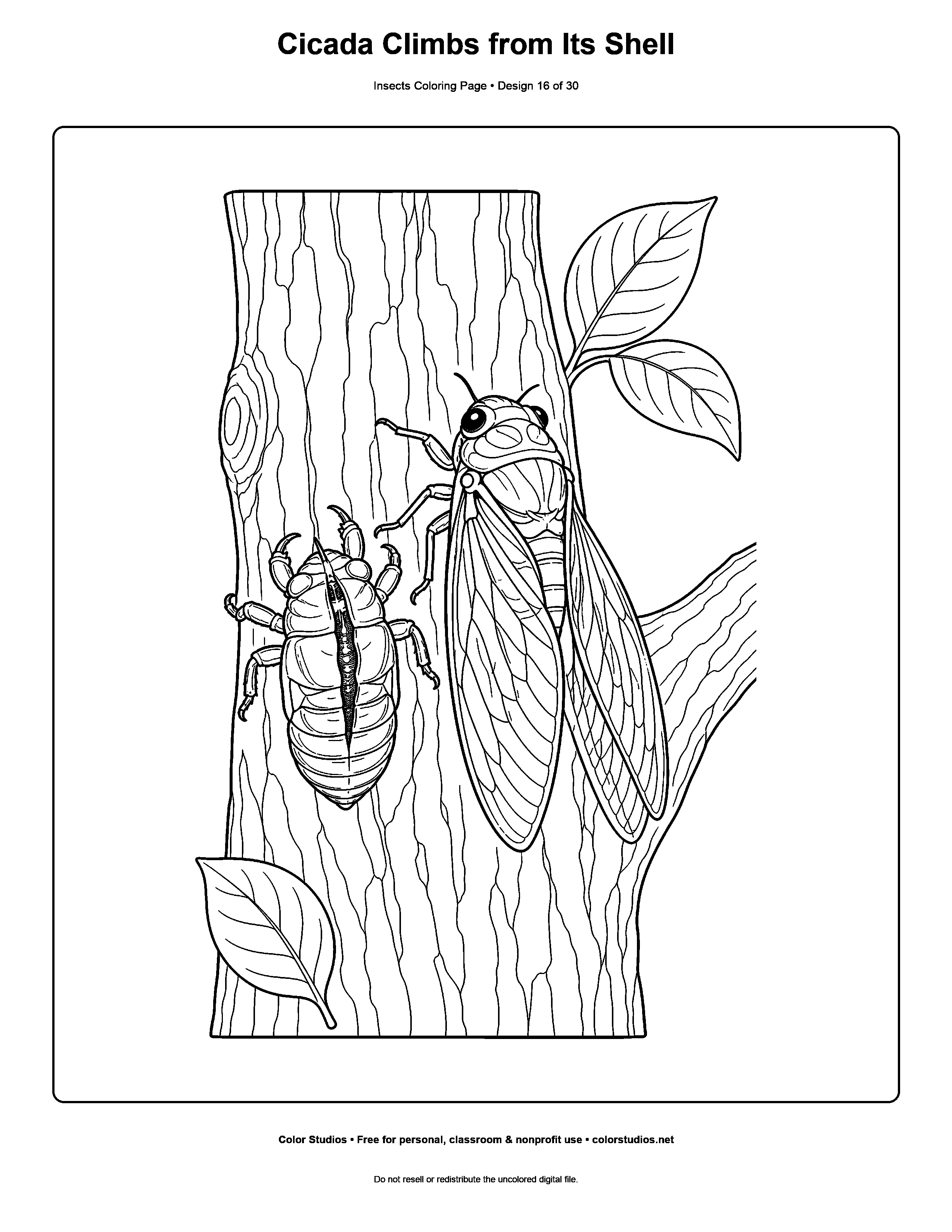
Adult cicada beside its empty nymph shell on a tree trunk.
US Letter · 2550 × 3300 PNG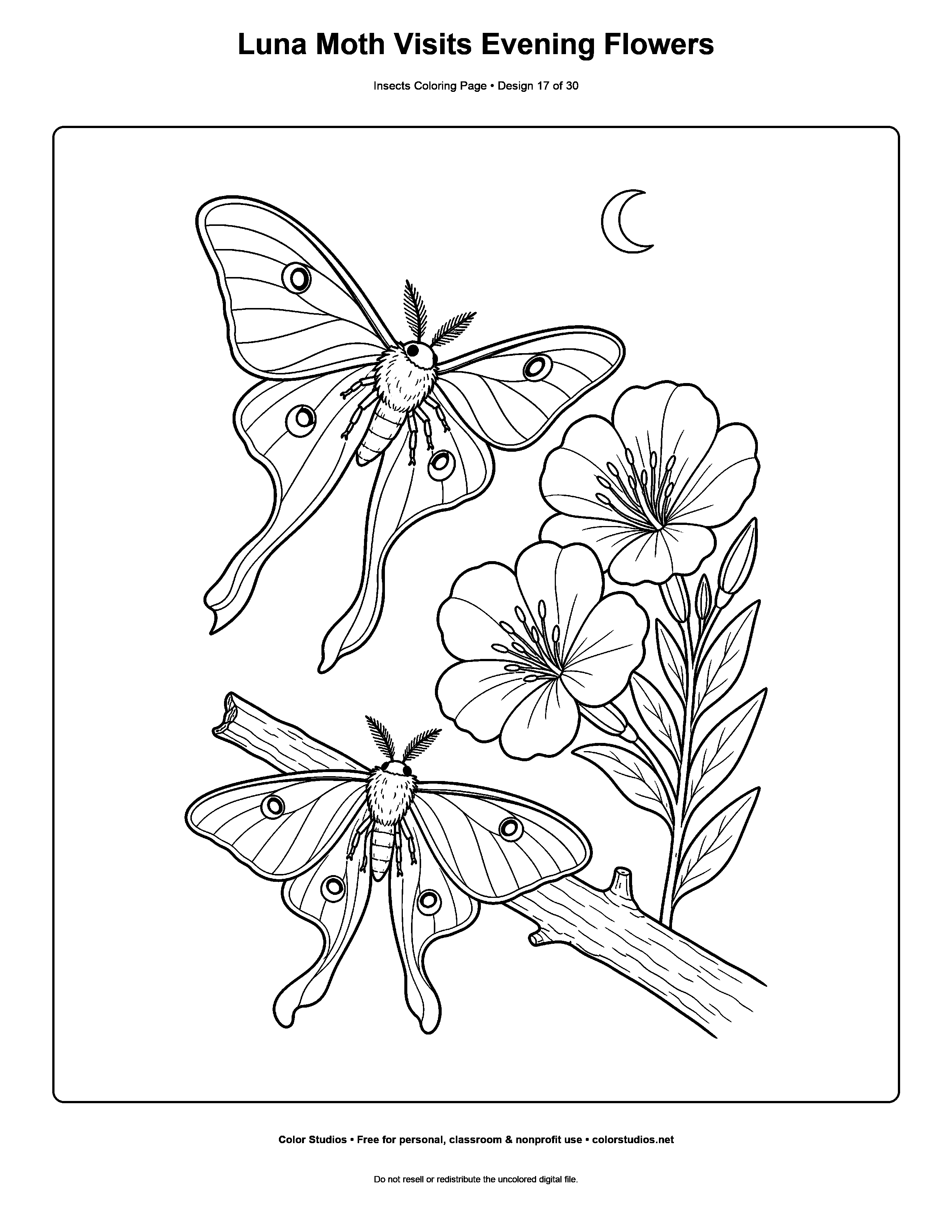
Two luna moths visiting evening primrose flowers under a crescent moon.
US Letter · 2550 × 3300 PNG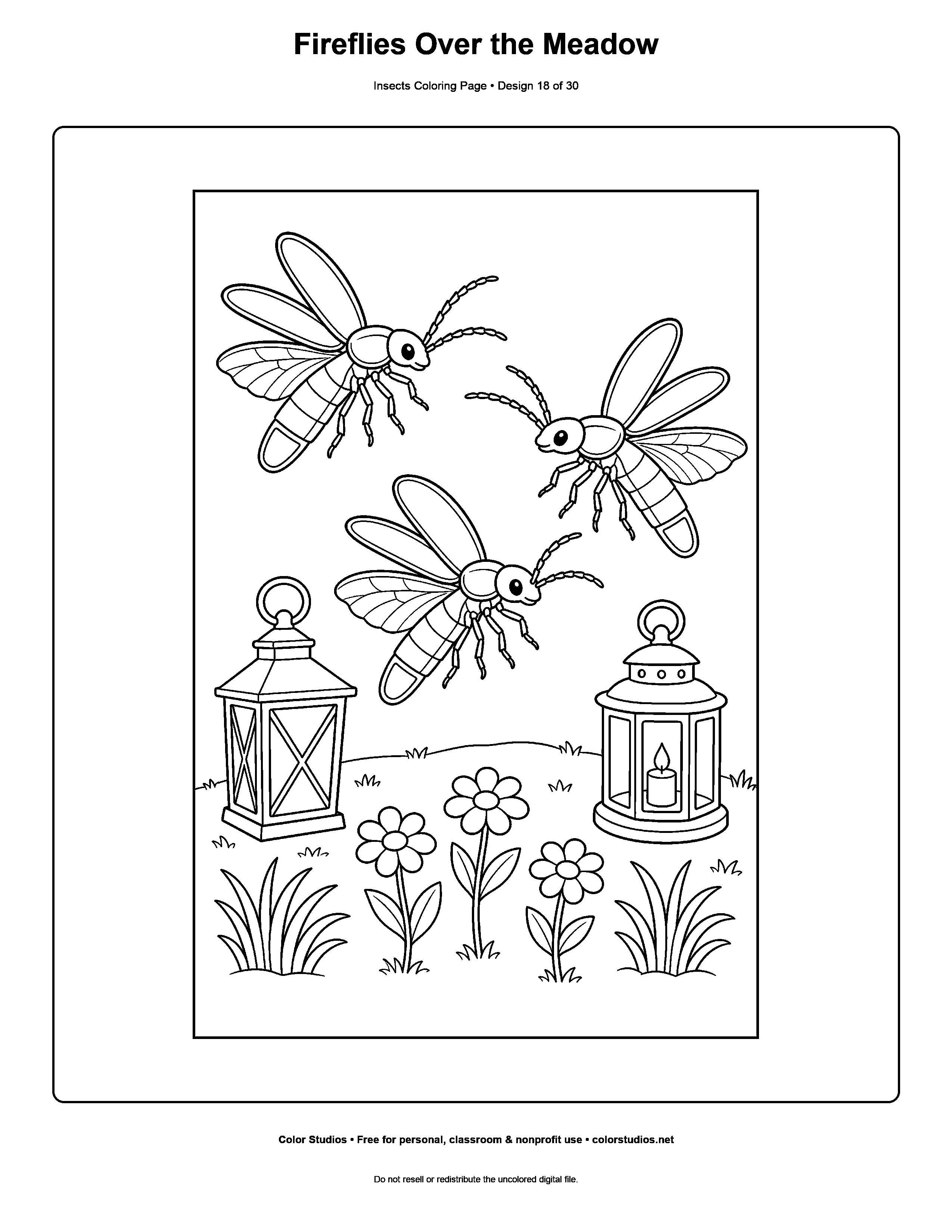
Three firefly beetles flying above a flower meadow at dusk.
US Letter · 2550 × 3300 PNG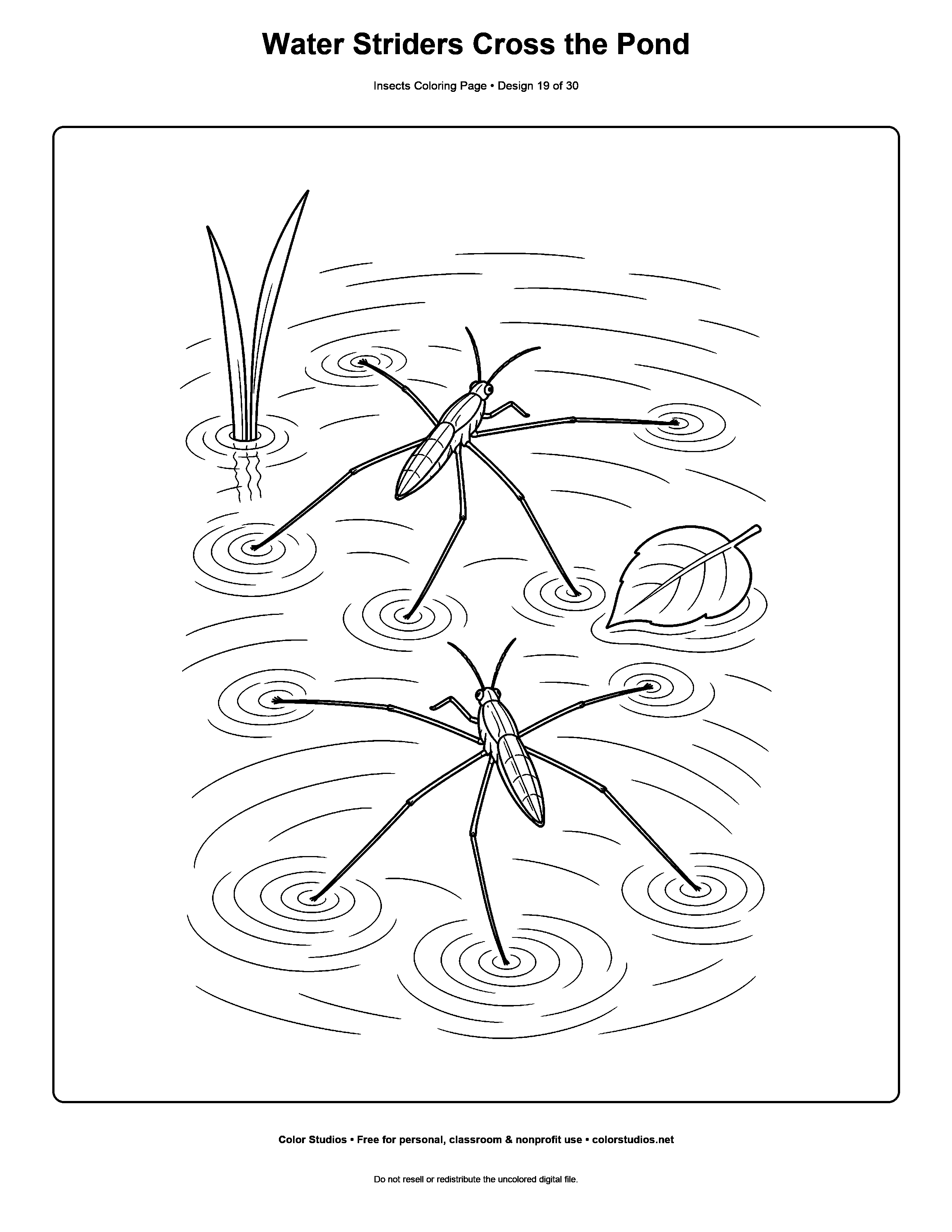
Two six-legged water striders skating across a calm pond.
US Letter · 2550 × 3300 PNG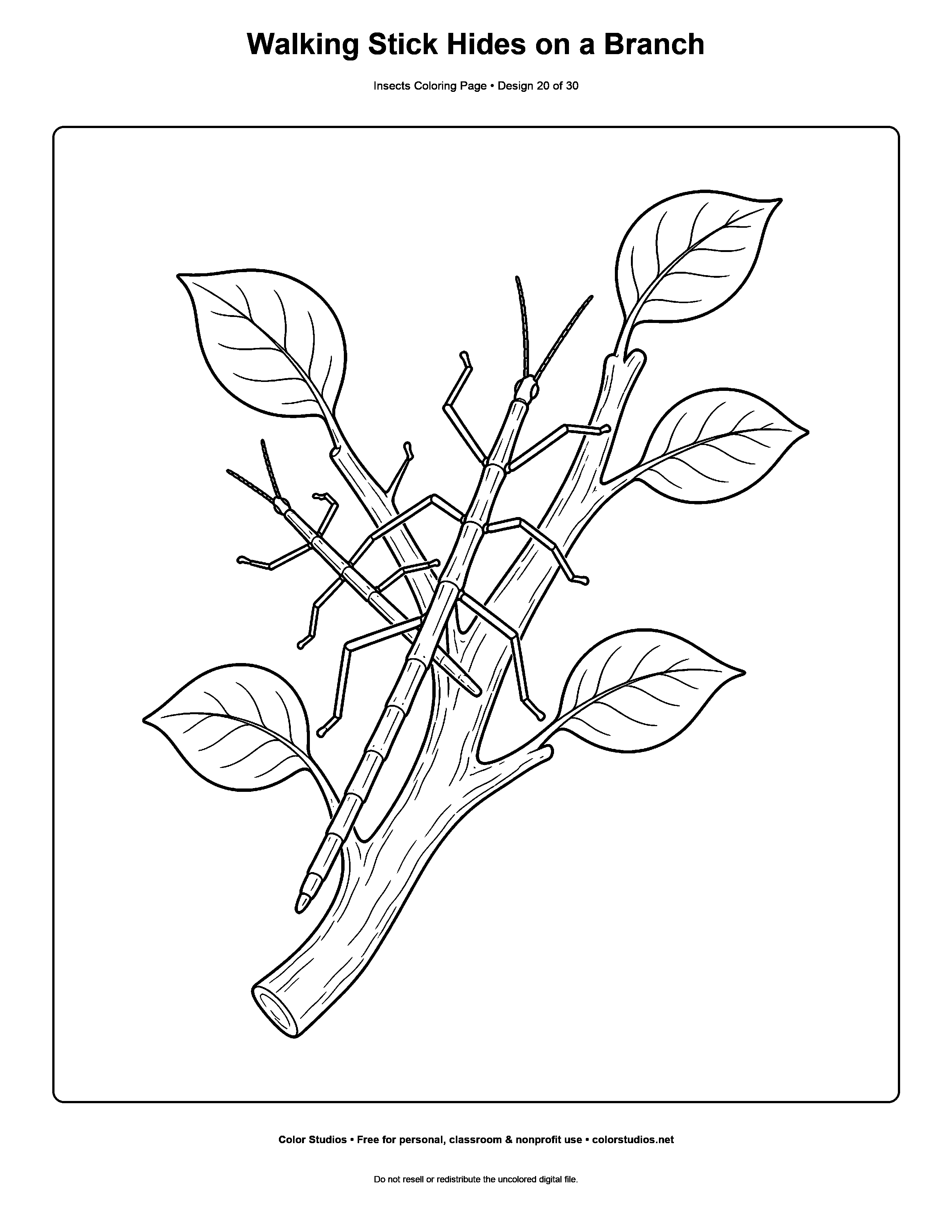
Two walking stick insects camouflaged on a leafy forked branch.
US Letter · 2550 × 3300 PNG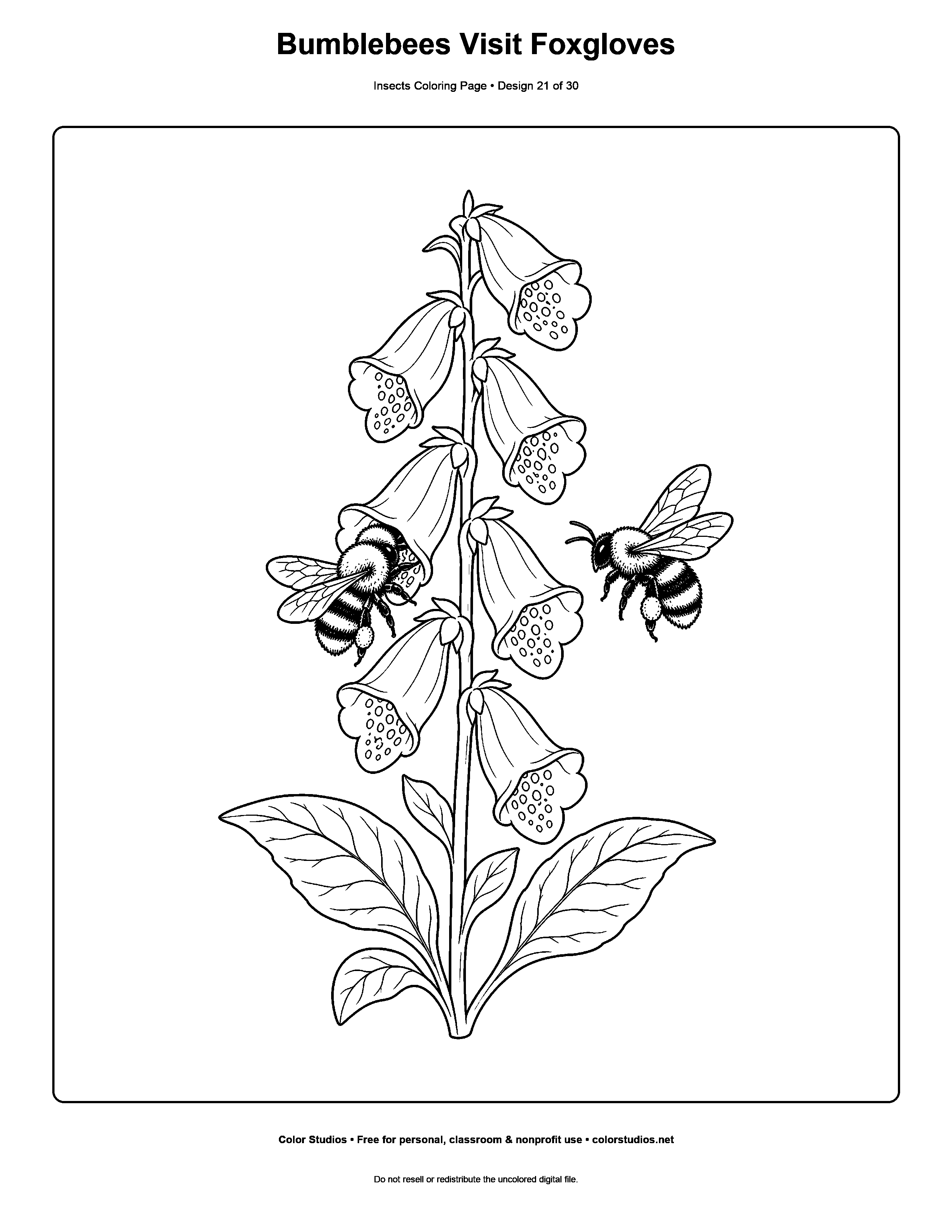
Two bumblebees collecting pollen from six foxglove flowers.
US Letter · 2550 × 3300 PNG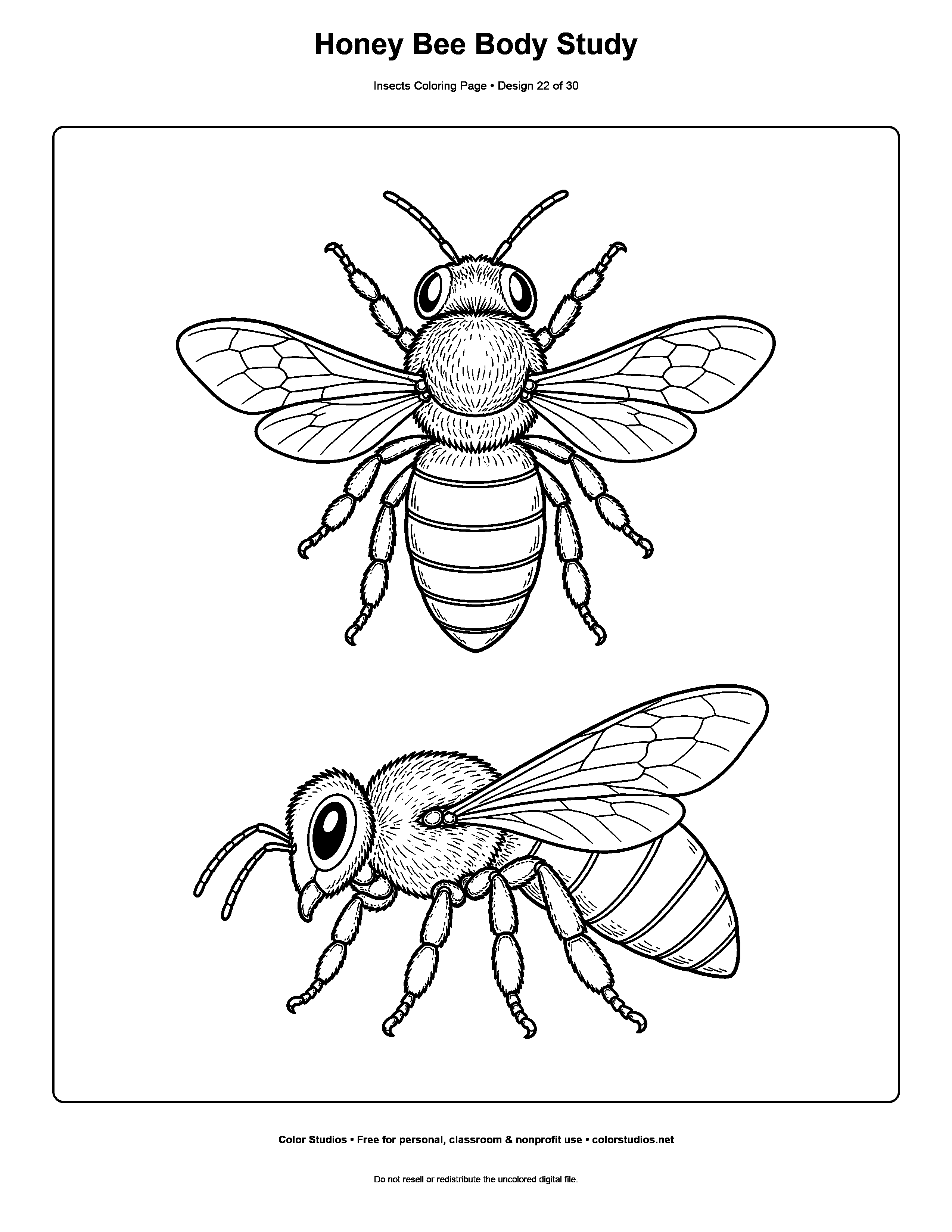
Realistic dorsal and side views of a worker honey bee.
US Letter · 2550 × 3300 PNG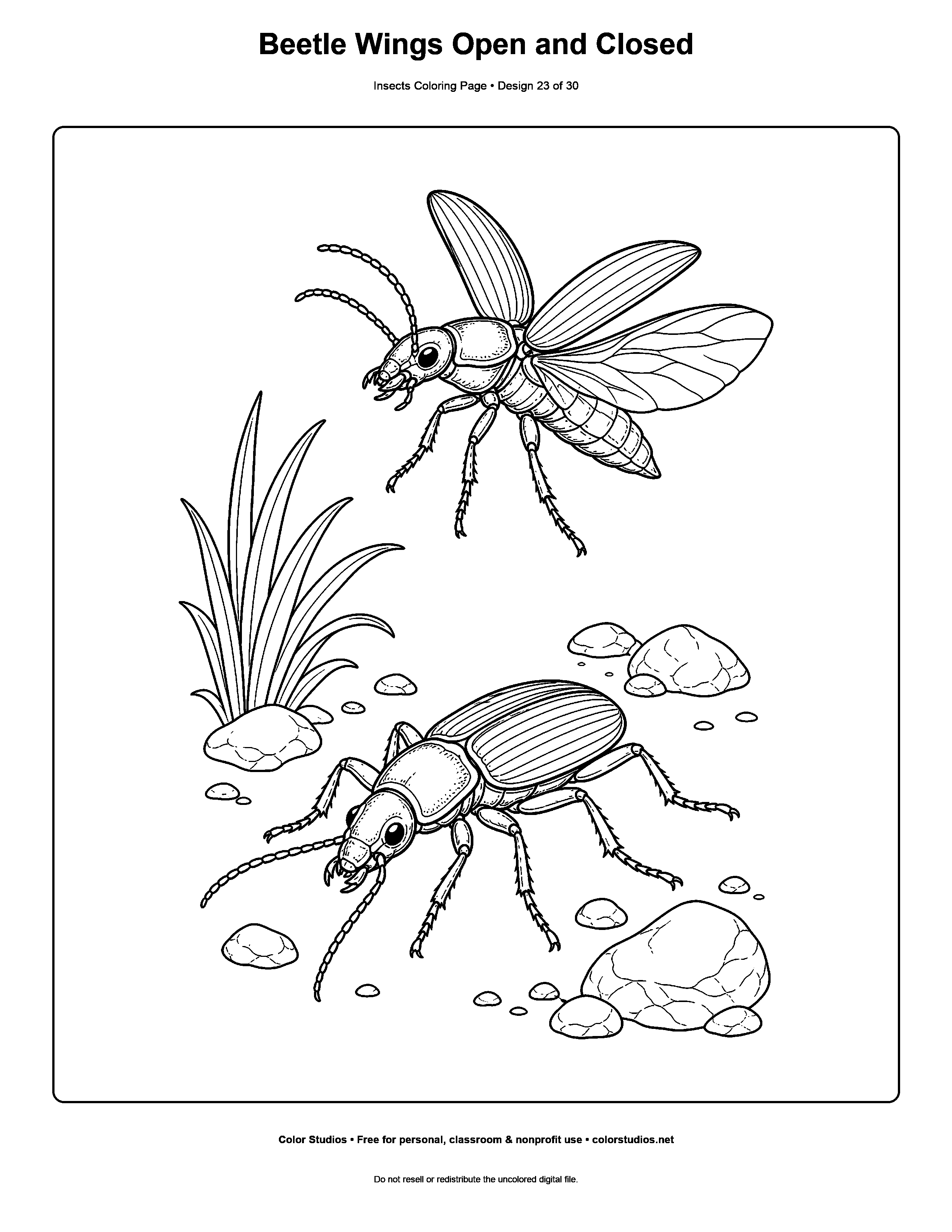
Realistic ground beetles showing closed wing cases and unfolded flight wings.
US Letter · 2550 × 3300 PNG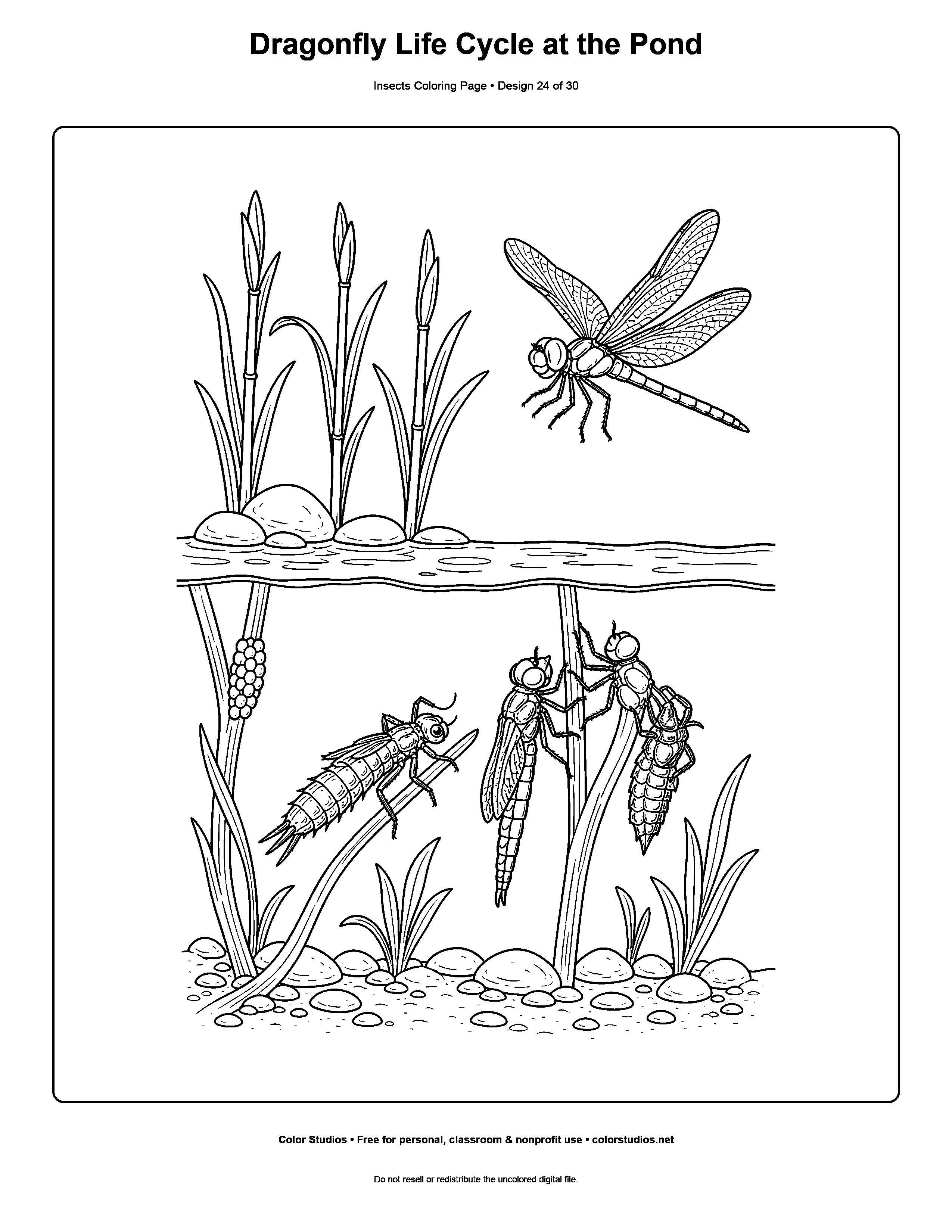
Dragonfly life cycle from pond eggs and aquatic nymph to winged adult.
US Letter · 2550 × 3300 PNG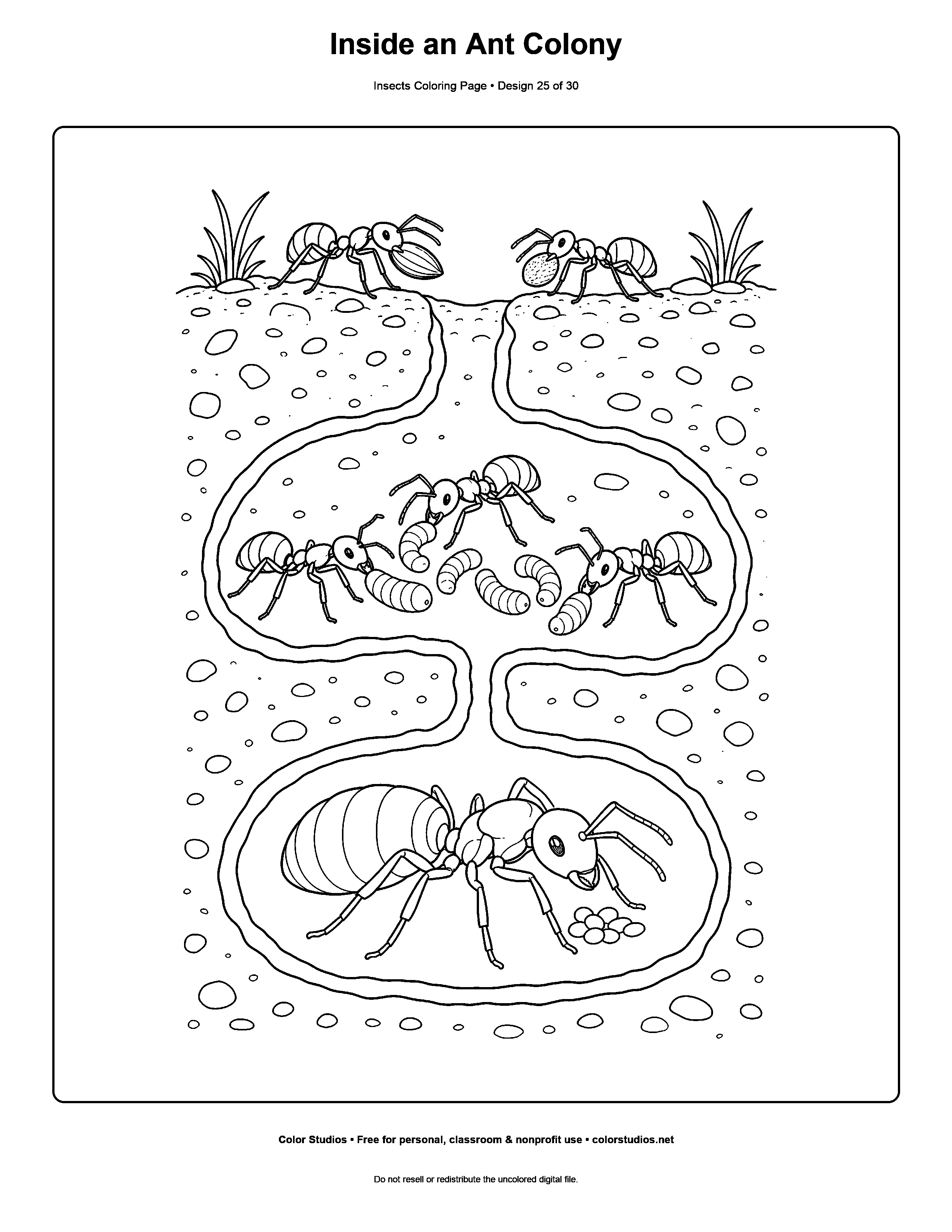
Realistic soil cutaway of a queen, worker ants, eggs, larvae, tunnels, and seed chamber.
US Letter · 2550 × 3300 PNG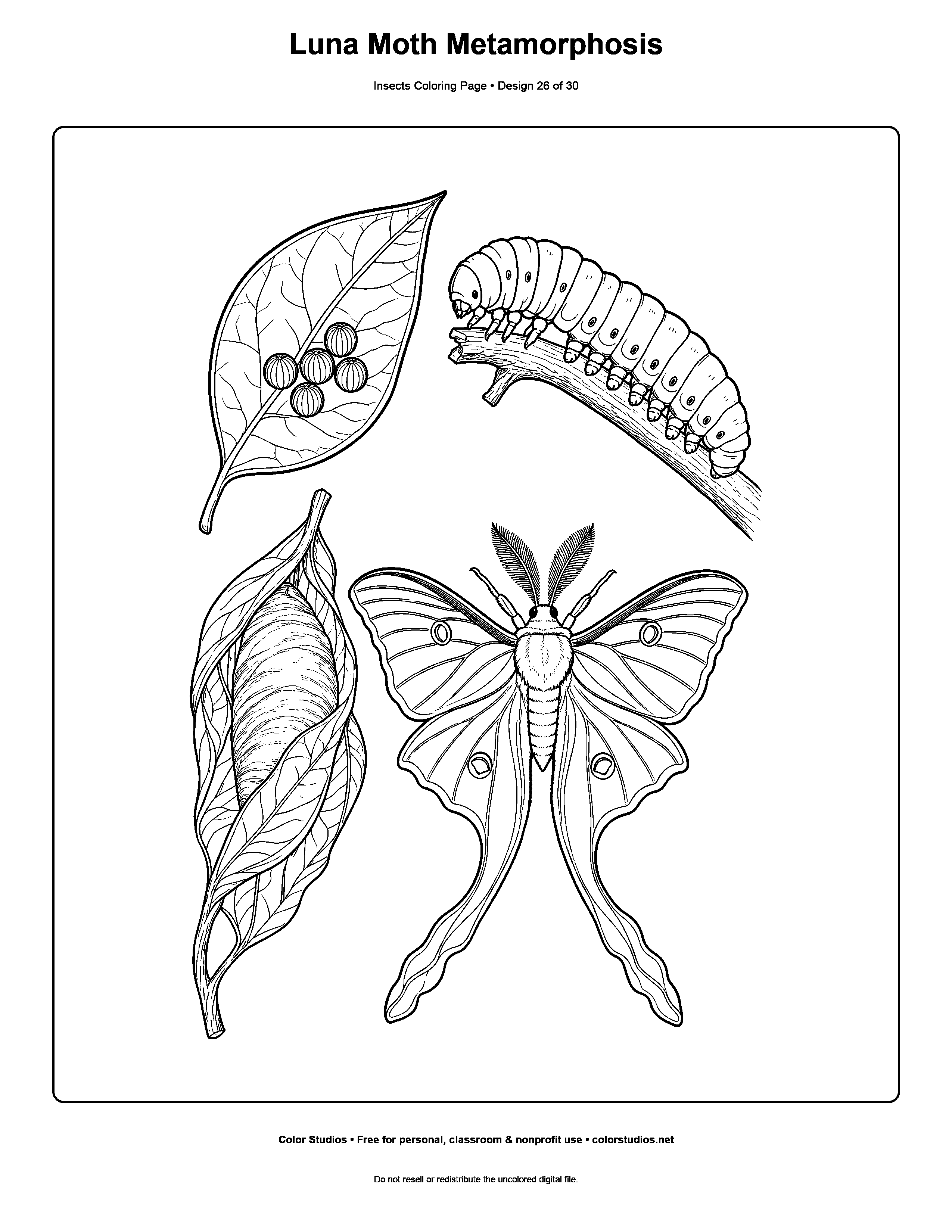
Luna moth life cycle with eggs, caterpillar, cocoon, and four-winged adult.
US Letter · 2550 × 3300 PNG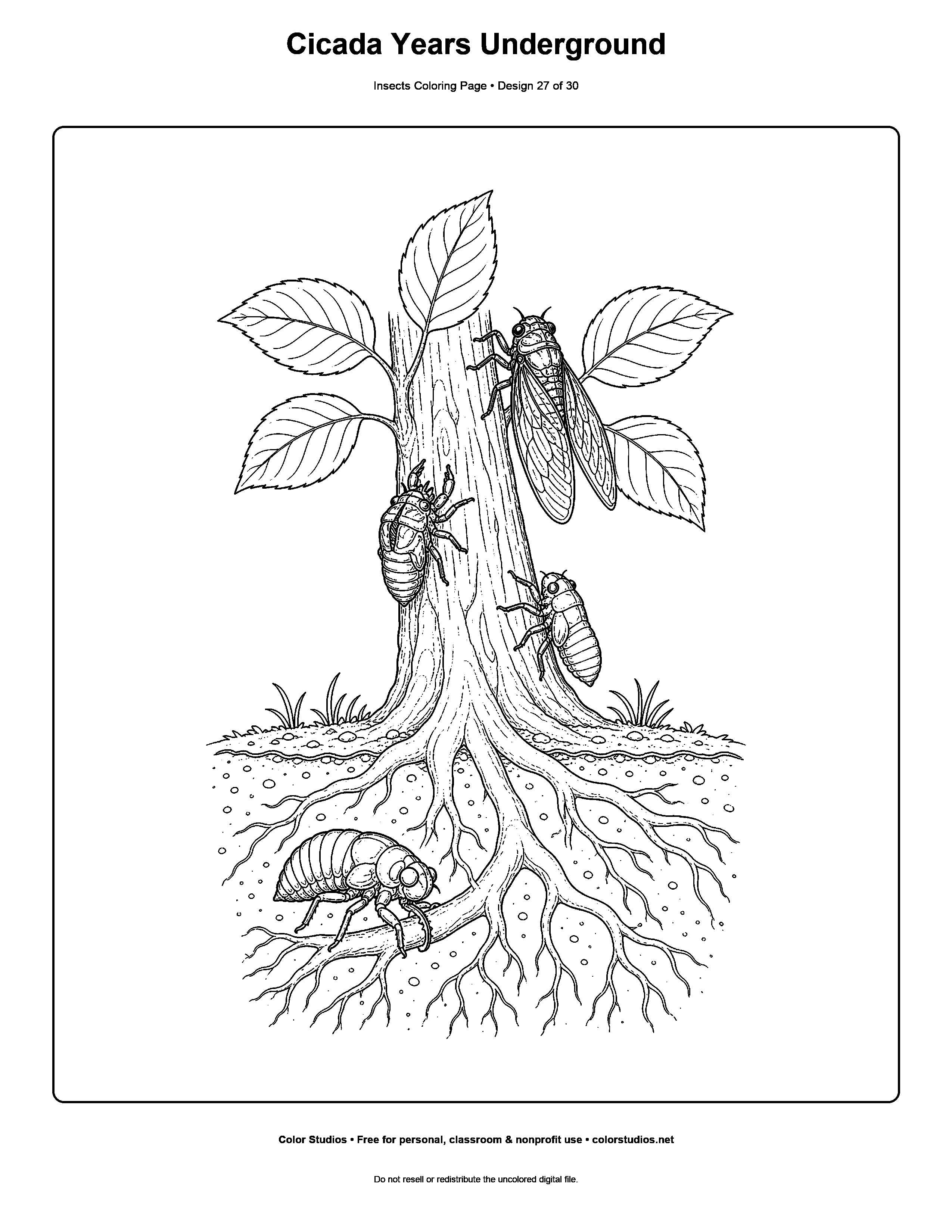
Cicada life cycle with underground nymph, climbing nymph, empty shell, and winged adult.
US Letter · 2550 × 3300 PNG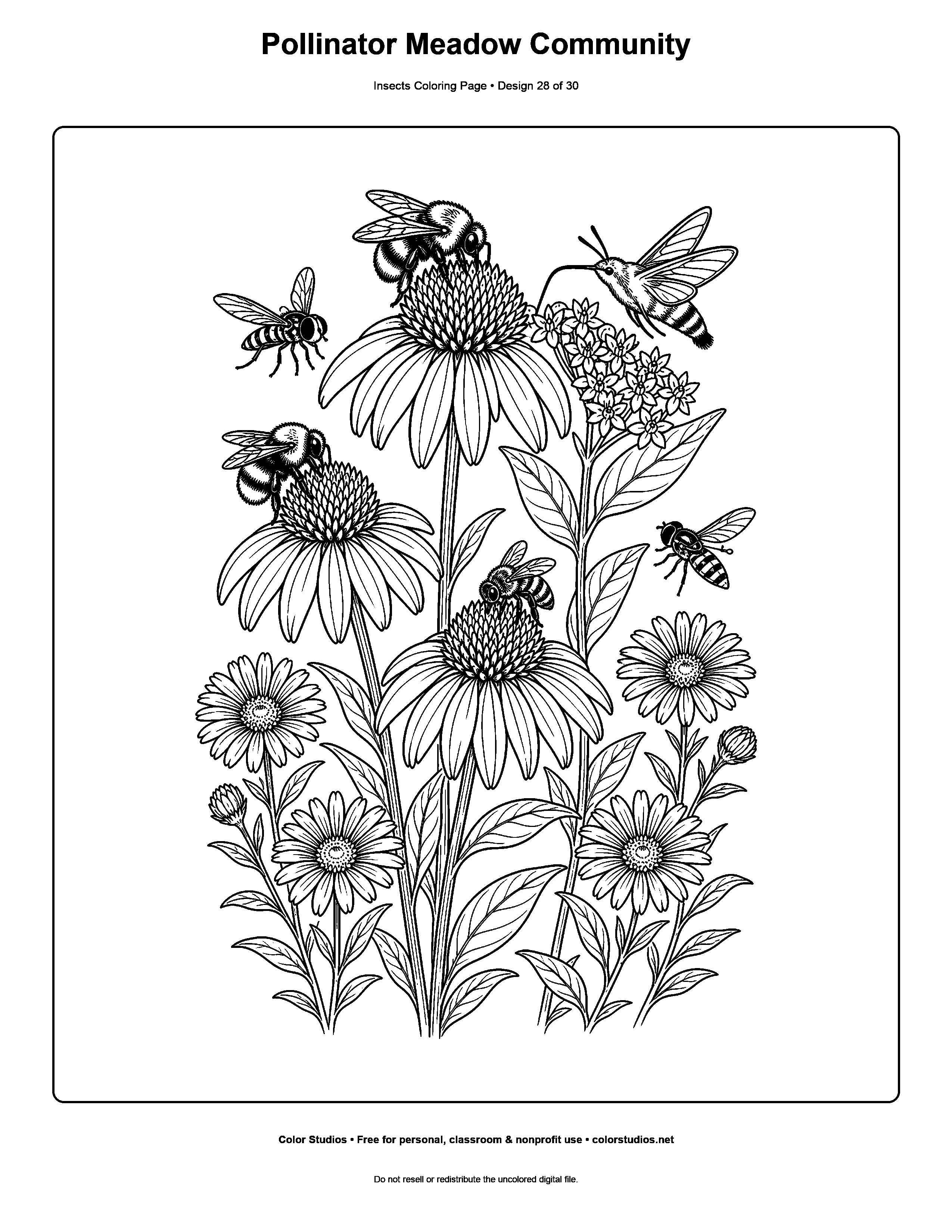
Detailed meadow with bumblebees, honey bee, hoverflies, and hummingbird moth visiting native flowers.
US Letter · 2550 × 3300 PNG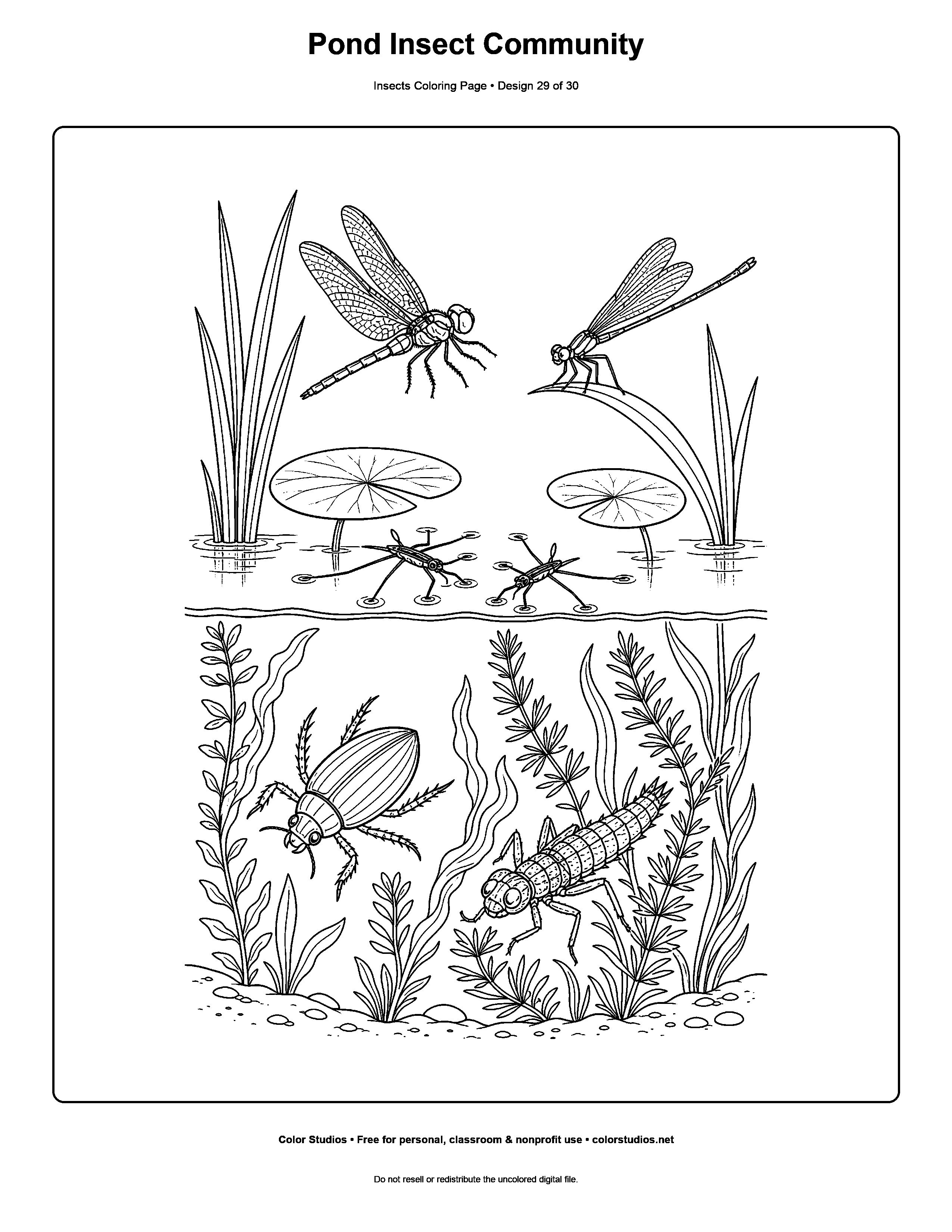
Detailed pond community with dragonfly, damselfly, water striders, diving beetle, and dragonfly nymph.
US Letter · 2550 × 3300 PNG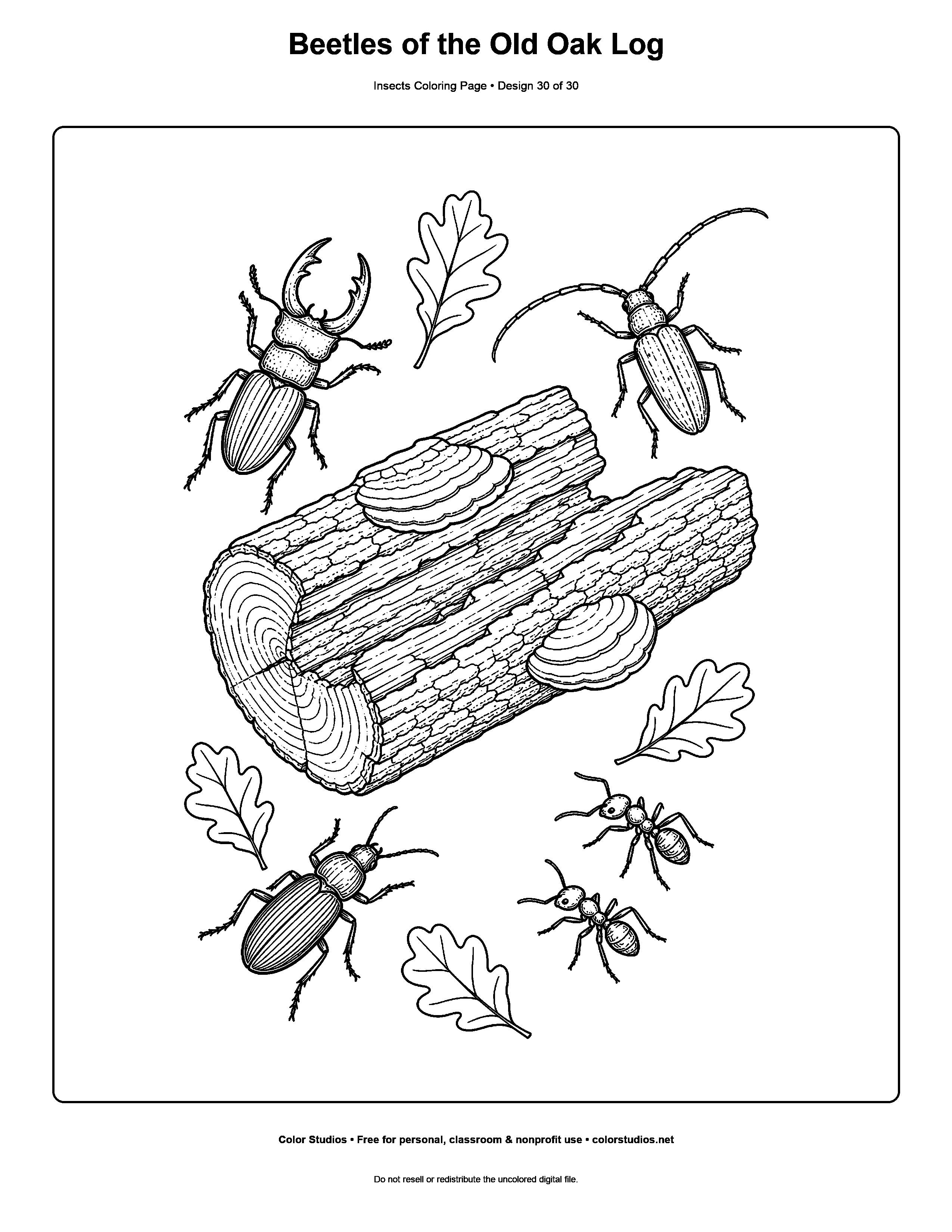
Detailed old oak log with stag, longhorn, and ground beetles plus worker ants.
US Letter · 2550 × 3300 PNGThis broad collection goes well beyond one butterfly or a repeated cartoon bug. Roomy beginner sheets introduce a ladybug, honey bee, ant, dragonfly, stag beetle, grasshopper, praying mantis, firefly, and field cricket as distinct subjects. Story scenes then follow bees visiting sunflowers and foxgloves, ants traveling as a team, ladybugs exploring a vegetable garden, dragonflies patrolling a pond, a dung beetle rolling its food ball, a leafcutter bee building a nest, a cicada emerging on bark, luna moths visiting evening flowers, and water striders moving across calm water. Changes in species, habitat, action, scale, and viewpoint give children real choices instead of superficial copies of the same drawing.
In everyday speech, people often call any small crawling insect a bug, while entomologists use “true bug” for a particular insect group that includes shield bugs and cicadas. Every animal in these bug coloring pages is a true insect rather than a spider, centipede, or millipede. The planned artwork keeps six legs attached to the thorax and uses recognizable antennae, wings, body shapes, and habitats where those features are visible. Detailed woodland, meadow, and night-garden scenes add challenge without burying the subjects in decorative clutter. The designs are original, non-branded, text-free, and composed with practical print margins so crayons, pencils, or markers have clean enclosed areas to fill.
The 30 original designs include bees, beetles, ants, ladybugs, dragonflies, damselflies, grasshoppers, mantises, moths, fireflies, cicadas, crickets, water striders, walking sticks, and hoverflies. The set moves from clear single subjects to pollination, colony, pond, meadow, woodland, and life-cycle scenes, with individual Letter/A4 PNGs and complete PDF bundles.
Start with Seven-Spotted Ladybug, Honey Bee on a Daisy, Worker Ant Carries a Seed, Dragonfly on a Cattail, Stag Beetle on Oak Bark, or Grasshopper on Clover. These beginner sheets use one obvious subject, generous white space, and broad enclosed areas that are comfortable for preschool crayons and early colorists.
The realistic studies emphasize recognizable features instead of adding human faces, extra legs, or fantasy wings. Children can compare a honey bee from two views, see how beetle wing cases open, explore dragonfly and luna moth life cycles, look inside an ant colony, and follow cicadas above and below ground. The pages support curiosity, but they are not a substitute for a scientific identification guide.
Yes. Teachers, schools, libraries, childcare programs, therapists, families, and nonprofit nature groups may print copies for the children they directly serve. Use an individual Letter or A4 PNG for one activity or download the matching complete PDF bundle. The original uncolored digital files may not be sold, reposted, or repackaged.
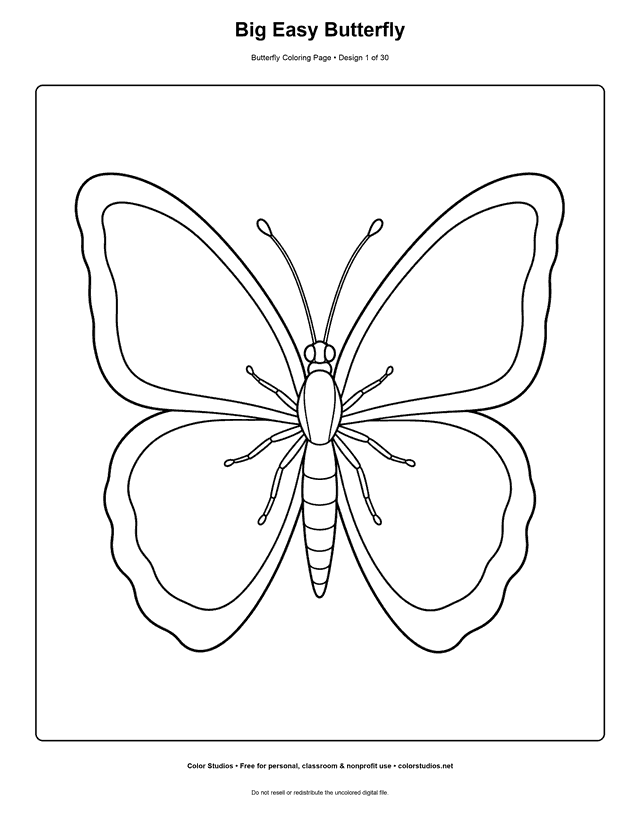 30 pages
Easy wings, flower gardens, life-cycle art, species studies, and patterns.
View collection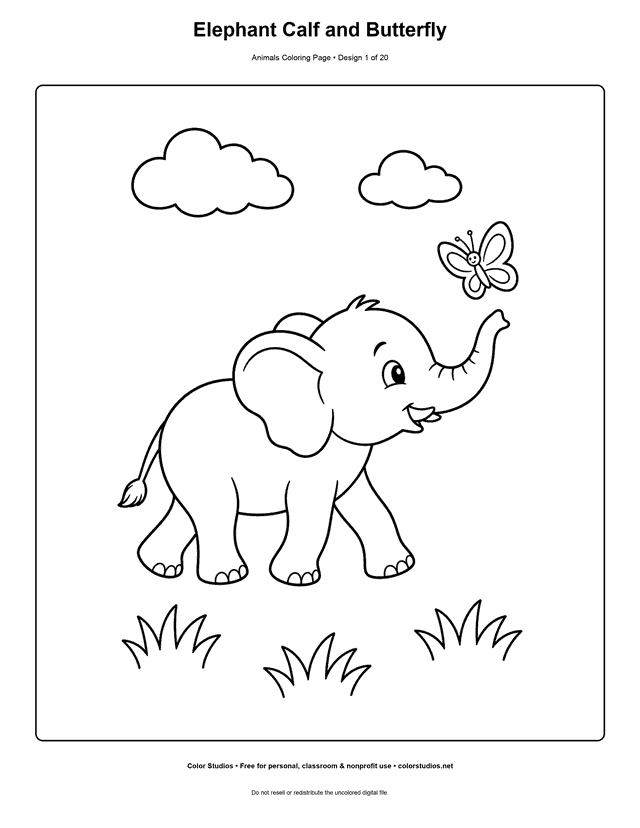 20 pages
Twenty different animals from meadows, forests, farms, and rivers.
View collection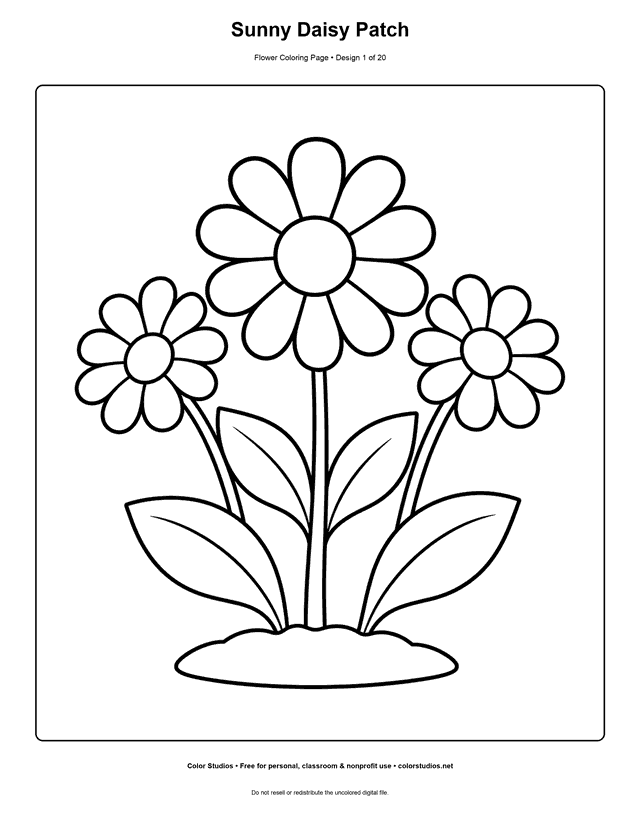 40 pages
Roomy blooms, bouquets, garden scenes, and detailed botanical designs.
View collection